
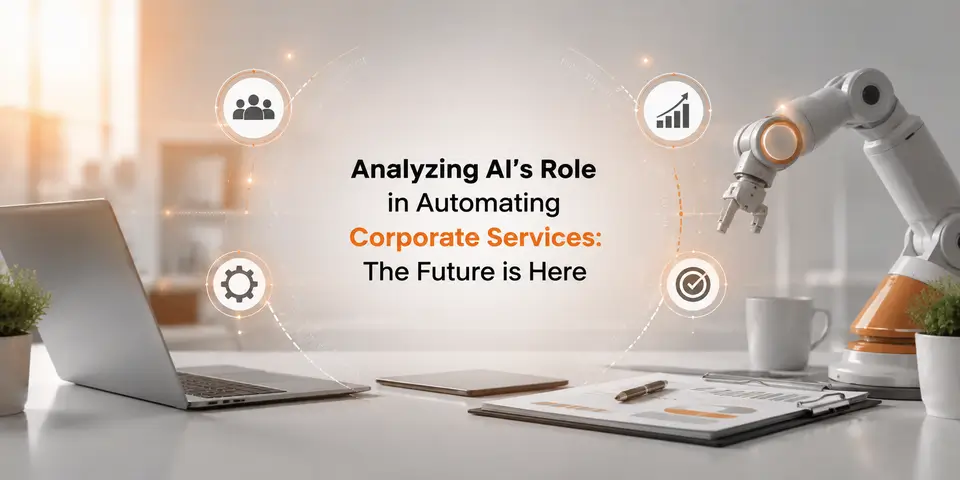
15 Min to Unlock Smarter Business Efficiency with AI Automation Corporate
Introduction
Artificial Intelligence is rapidly changing how corporate service providers manage people, processes, data, and customer interactions. For businesses focused on scaling without increasing overhead at the same pace, AI Automation Corporate strategies can create a more efficient and resilient operating model.
Table of Contents
- Introduction
- Common Challenges AI Can Help Address
- 1. Human Resources: Automating Administrative Work
- 2. Financial Services: Improving Accuracy and Efficiency
- 3. Customer Service: Faster and More Consistent Support
- 4. Sales and Marketing: Turning Data Into Action
- 5. Predictive Analytics for Proactive Operations
- 6. Knowledge Management and Internal Productivity
- 7. Integrating AI With Existing Business Systems
- 8. Improving Quality and Reducing Errors
- 9. Continuous Monitoring and Improvement
- A Practical Corporate Automation Scenario
- How to Implement AI Automation Strategically
- How SySpree Supports AI Automation
- Conclusion: Creating a Smarter Corporate Operating Model
Companies generating significant monthly revenue are under constant pressure to improve productivity, maintain service quality, and control costs. A structured AI Automation Corporate approach helps organizations automate repetitive activities while allowing employees to concentrate on strategic and relationship-focused work.

The AI Revolution in Corporate Services
Corporate services such as human resources, finance, customer support, sales, and administration involve large volumes of recurring tasks. Many of these processes depend on manual reviews, data entry, approvals, and follow-up activities.
The purpose of AI Automation Corporate is not simply to remove human involvement. It is to determine where intelligent automation can reduce friction, improve accuracy, and strengthen the overall quality of service delivery.
Why Businesses Are Moving Toward AI Automation
- Reduced repetitive workload
- Faster processing times
- Improved service consistency
- Better use of operational data
- More scalable internal processes
- Greater capacity for strategic work
For growing SMEs, AI Automation Corporate can become an important way to increase capacity without relying entirely on additional headcount.
Common Challenges AI Can Help Address
Manual business processes often become more difficult to manage as companies grow. More customers, employees, transactions, and service requests can create bottlenecks across departments.
Without a clear AI Automation Corporate strategy, firms may experience rising costs, slower responses, inconsistent processes, and increased pressure on employees.
Without Intelligent Automation
- Employees spend time repeating administrative tasks.
- Customer requests wait in queues.
- Operational data remains fragmented.
- Manual errors become more frequent.
- Managers have limited real-time visibility.
With Intelligent Automation
AI-Powered Automation can help businesses route information, process documents, trigger workflows, and complete repetitive actions with greater consistency.
This makes AI Automation Corporate useful for companies that want to improve efficiency while preserving human oversight for complex decisions.
1. Human Resources: Automating Administrative Work
Human resources teams handle recruitment, employee records, onboarding, scheduling, payroll coordination, and internal support. Many of these activities contain predictable steps that can be streamlined.
A practical AI Automation Corporate HR strategy can automate application organization, interview scheduling, onboarding workflows, and routine employee queries.
Recruitment Automation
AI systems can help organize candidate information and identify applicants who match predefined requirements. Human professionals should still evaluate suitability and make final decisions, but automation can reduce the administrative burden around recruitment.
For HR teams, AI Automation Corporate can shorten processing times and give recruiters more time to focus on candidate quality and cultural fit.
Employee Support
Internal Chatbots and Virtual Assistants can answer common questions regarding policies, leave procedures, onboarding, and benefits. This can reduce repetitive requests to HR departments while giving employees faster access to information.

2. Financial Services: Improving Accuracy and Efficiency
Finance teams process invoices, expenses, account records, billing information, reconciliations, and compliance documents. These activities require accuracy but often involve repetitive manual work.
With AI Automation Corporate, businesses can automate document classification, invoice extraction, transaction categorization, and approval routing.
Supporting Financial Analysis
Data Science and Analytics can help finance teams identify trends, detect unusual activity, and understand spending patterns more clearly.
When automation and analytics work together, AI Automation Corporate can provide leadership teams with faster access to useful financial information.
Maintaining Human Oversight
Financial automation should include clear approval rules and review processes. High-value transactions, regulatory decisions, and unusual cases should remain subject to appropriate human validation.
3. Customer Service: Faster and More Consistent Support
Customers expect fast responses regardless of when or how they contact a business. Support teams can struggle when large volumes of similar questions consume most of their available time.
Chatbots and Virtual Assistants can make AI Automation Corporate especially valuable in customer service by responding to common questions, gathering initial information, and routing requests to the appropriate teams.
Benefits for Customer Support
- Faster first-response times
- 24/7 basic assistance
- Consistent answers to routine questions
- Automatic enquiry classification
- Reduced workload for support agents
The strongest AI Automation Corporate customer-service model uses AI for routine interactions while retaining human agents for sensitive, complex, or high-value conversations.
4. Sales and Marketing: Turning Data Into Action
Sales and marketing teams regularly work with customer behaviour, lead activity, campaigns, and large datasets. AI can help identify patterns and prioritize opportunities.
Predictive Analytics allows AI Automation Corporate systems to estimate which prospects may be more likely to convert, which customers may require attention, and which campaigns may deserve additional investment.
Marketing Applications
- Lead scoring
- Audience segmentation
- Campaign recommendations
- Customer behaviour analysis
- Automated follow-up workflows
Behavioral Targeting can further improve relevance by tailoring marketing messages based on user activity and previous engagement.

5. Predictive Analytics for Proactive Operations
Traditional reporting focuses on what has already happened. Predictive Analytics helps businesses estimate what may happen next based on historical data and emerging patterns.
This capability strengthens AI Automation Corporate by enabling businesses to plan rather than simply react.
Potential Predictive Use Cases
- Forecasting service demand
- Predicting staffing requirements
- Identifying potential customer churn
- Detecting operational bottlenecks
- Forecasting sales opportunities
6. Knowledge Management and Internal Productivity
Employees frequently spend time looking for client records, policies, internal documents, process instructions, and project information. Intelligent knowledge systems can help retrieve this information faster.
Prompt Engineering can improve how employees interact with generative AI tools by helping them request more structured and contextually useful outputs.
This makes AI Automation Corporate valuable not only for external customer-facing processes but also for internal productivity.
Knowledge Management Benefits
- Faster information retrieval
- More consistent internal answers
- Reduced duplication of effort
- Better employee onboarding
- Improved collaboration between departments
7. Integrating AI With Existing Business Systems
AI is more effective when it connects with the tools employees already use. CRM systems, accounting software, help desks, analytics platforms, and internal databases should not operate in isolation.
Third-Party Integrations can connect these platforms and allow AI Automation Corporate workflows to move information automatically between systems.
Common Integration Opportunities
- CRM platforms
- Customer support software
- Accounting and finance systems
- Email and marketing platforms
- Analytics dashboards
- Document management tools
Connected systems help AI Automation Corporate deliver more consistent results because information can flow across the organization without repeated manual entry.
8. Improving Quality and Reducing Errors
AI can review large amounts of information quickly and highlight anomalies, missing fields, unusual transactions, or inconsistencies that require human attention.
Quality-focused AI Automation Corporate can help companies reduce preventable mistakes while maintaining stronger oversight over critical processes.
Quality Control Applications
- Document validation
- Duplicate detection
- Transaction monitoring
- Process compliance checks
- Service-level monitoring

9. Continuous Monitoring and Improvement
AI automation should never be treated as a one-time implementation. Business processes evolve, customer expectations change, and automated systems may need adjustment as new information becomes available.
Performance Monitoring helps organizations understand whether AI Automation Corporate is producing the expected improvements.
Metrics Worth Tracking
- Processing time
- Error reduction
- Customer response time
- Cost per transaction
- Automation completion rate
- Employee adoption
- Customer satisfaction
A Practical Corporate Automation Scenario
Consider a professional services company receiving hundreds of customer requests each week. Employees manually classify every enquiry, send acknowledgement emails, and forward requests to individual departments.
By introducing AI Automation Corporate workflows, the company can automatically categorize requests, route them to the appropriate team, send confirmation messages, and flag urgent cases.
The result is more than time savings. Customers receive faster responses, employees have clearer priorities, and managers gain better visibility into workloads.
How to Implement AI Automation Strategically
Step 1: Assess Business Needs
Identify tasks that consume substantial employee time, follow repeatable steps, and create measurable operational costs. These are usually strong candidates for AI Automation Corporate.
Step 2: Define Clear Objectives
Decide what the implementation should improve. Objectives may include reducing processing time, improving accuracy, increasing service capacity, or lowering operating expenses.
Step 3: Review Data Readiness
AI depends on reliable data. Review information quality, accessibility, security permissions, and integration requirements before implementation.
Step 4: Start With a Focused Pilot
Implement automation within one controlled workflow first. This allows teams to measure results and identify potential problems before scaling.
Step 5: Train Employees
Employees need to understand how AI supports their responsibilities and when human review remains necessary. Successful AI Automation Corporate implementation depends on employee participation.
Step 6: Monitor and Improve
Use Performance Monitoring to compare results against the original objectives and refine workflows over time.
How SySpree Supports AI Automation
SySpree helps businesses identify automation opportunities, design workflows, integrate technology, and monitor results.
Our AI Automation Corporate approach begins with understanding your operations, customer needs, existing systems, and growth objectives.
SySpree’s AI Capabilities
- AI-Powered Automation
- Predictive Analytics
- Prompt Engineering
- Data Science and Analytics
- Chatbots and Virtual Assistants
- Third-Party Integrations
By combining these capabilities, SySpree helps businesses develop AI Automation Corporate systems that are practical, measurable, and capable of scaling alongside the organization.
Conclusion: Creating a Smarter Corporate Operating Model
AI automation can transform corporate services by reducing repetitive work, improving access to information, supporting better decisions, and creating faster customer experiences.
The most effective AI Automation Corporate strategies start with real business problems rather than technology trends. They combine intelligent tools with human oversight, clear objectives, reliable data, and continuous improvement.
For businesses looking to scale efficiently, AI Automation Corporate offers a practical pathway toward lower operational friction, stronger productivity, and more consistent service delivery.
Ready to modernize your corporate operations with AI? Contact SySpree to build an intelligent automation strategy aligned with your business goals.
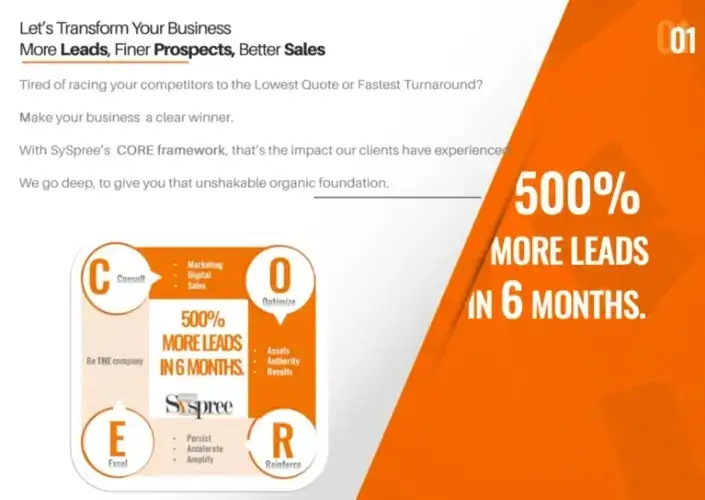
🚀 Want Results Like 500% More Leads in 4 Months?
Let’s talk about what these strategies can do for your business.
We’ll tailor a plan for your goals — no fluff, no pressure.
📧 Or just drop us a line at https://syspree.com/contact/
You may also like ( Author’s curated blogs for you) :
- PPC vs. Email Marketing: Which Delivers More for Corporate Firms?
- Harnessing the Future: Mastering Digital Marketing in the Corporate Services Sector
- Unlocking Business Growth: 9 Digital Marketing Tactics for Corporate Services
- How to Apply AI to Transform Corporate Service Delivery: A Game-Changer for Business Growth
- Transforming Success: Inspiring AI Innovation Stories from Top Corporate Firms
This was beautiful Admin. Thank you for your reflections.