
15 Min to Compare High-Performance Marketing Strategies with PPC vs E-mail
Introduction
Corporate firms often face a difficult choice when deciding how to allocate their digital marketing budgets. PPC vs E-mail is one of the most common comparisons because both channels can generate measurable results, but they work in very different ways.
Table of Contents
- Introduction
- Understanding Pay-Per-Click Advertising
- Understanding Email Marketing
- PPC vs. Email Marketing for Immediate Results
- PPC vs. Email Marketing for Long-Term Relationships
- Which Channel Produces Better ROI?
- Audience Targeting and Personalization
- Lead Quality and Conversion Potential
- A Practical Corporate Example
- Why an Integrated Strategy Often Works Best
- When Corporate Firms Should Prioritize PPC
- When Corporate Firms Should Prioritize Email
- Common Mistakes to Avoid
- How SySpree Builds Integrated Marketing Campaigns
- Conclusion
Pay-Per-Click Advertising (PPC) can create immediate visibility, while Email Marketing is designed to nurture relationships over time. Understanding PPC vs E-mail helps businesses choose the right channel for their goals, audience, budget, and sales cycle.

Understanding Pay-Per-Click Advertising
What Is PPC?
PPC is an advertising model in which a business pays whenever someone clicks its advertisement. Campaigns can run across search engines, social networks, and professional platforms such as Google Ads, Facebook Ads, and LinkedIn Ads.
In the PPC vs E-mail debate, PPC is usually the stronger option when a company needs rapid visibility or wants to reach prospects actively searching for a service.
Advantages of PPC
- Immediate visibility: Campaigns can begin generating traffic as soon as they go live.
- Precise targeting: Advertisers can target users by location, job title, industry, interests, and search intent.
- Budget control: Daily limits and bidding strategies help businesses manage spending.
- Measurable performance: Clicks, conversions, cost per lead, and return on ad spend can be tracked.
These advantages explain why many companies choose PPC when evaluating PPC vs E-mail for short-term acquisition.
Limitations of PPC
- Traffic usually stops when the advertising budget ends.
- Competitive industries can have expensive keywords.
- Poor targeting can consume budget without generating qualified leads.
- Campaigns require regular testing and optimization.
A weak landing page can also reduce the value of paid traffic. UI/UX Audits can reveal confusing layouts, weak calls to action, and form friction that may damage campaign performance.
Understanding Email Marketing
What Is Email Marketing?
Email Marketing involves sending relevant messages to prospects and customers who have agreed to receive communication. These messages may include newsletters, educational content, offers, event invitations, and follow-up sequences.
When comparing PPC vs E-mail, email often provides greater long-term value because it allows a business to continue communicating with an audience it has already acquired.
Advantages of Email Marketing
- Cost efficiency: Email can reach a large audience at a relatively low cost.
- Relationship building: Regular communication helps maintain trust and familiarity.
- Personalization: Messages can be adapted by industry, behaviour, interests, and buying stage.
- Measurable engagement: Open rates, clicks, replies, and conversions can be monitored.
For businesses focused on retention and nurturing, PPC vs E-mail often favours email because it supports repeated interaction without charging for every visit.
Limitations of Email Marketing
- Email lists require regular cleaning and management.
- Messages may be ignored in crowded inboxes.
- Poor segmentation can reduce engagement.
- Businesses must follow consent and privacy regulations.
Email also depends on having an audience. A company with a small database may need another channel to attract prospects before email can nurture them.

PPC vs. Email Marketing for Immediate Results
For immediate traffic, PPC vs E-mail usually favours PPC. Search and social advertisements can place a company in front of potential buyers within hours.
This makes PPC useful for product launches, limited-time offers, new service promotions, events, and campaigns that need fast market exposure.
However, immediate traffic does not guarantee profitable results. Strong targeting, persuasive messaging, relevant offers, and optimized landing pages are essential.
PPC vs. Email Marketing for Long-Term Relationships
For long-term relationship building, PPC vs E-mail generally favours email. Corporate buying decisions can take weeks or months, and prospects may need several interactions before they are ready to contact a provider.
Email allows firms to share educational resources, case studies, service updates, and personalized recommendations throughout the decision process.
This continuous communication can improve trust and help a brand remain visible until the prospect is ready to act.
Which Channel Produces Better ROI?
The answer to PPC vs E-mail depends on how return is measured. PPC can produce fast leads but may involve higher acquisition costs. Email may cost less per interaction, but it requires a healthy database and a consistent nurturing strategy.
PPC ROI Factors
- Cost per click
- Landing-page conversion rate
- Lead quality
- Sales conversion rate
- Average customer value
Email ROI Factors
- List quality
- Deliverability
- Open and click-through rates
- Lead-nurturing effectiveness
- Customer retention and repeat purchases
Custom Reporting can help leadership teams compare these metrics and understand which side of PPC vs E-mail contributes more effectively to revenue.

Audience Targeting and Personalization
PPC offers detailed audience controls, while email provides deeper personalization based on existing customer data. In the PPC vs E-mail comparison, both channels are powerful when audience information is accurate.
Behavioral Targeting can improve paid campaigns by focusing advertisements on users who have visited specific pages or shown interest in particular services.
Email segmentation can then continue the conversation by delivering messages based on the prospect’s industry, previous engagement, and buying stage.
Lead Quality and Conversion Potential
Lead quality is more important than lead volume. PPC may generate more enquiries quickly, but email may convert warmer prospects who already know the brand.
When evaluating PPC vs E-mail, companies should compare qualified opportunities, sales conversion rates, contract values, and acquisition costs rather than counting clicks alone.
Performance Monitoring helps identify where leads enter the funnel, how they progress, and which campaigns contribute to revenue.
A Practical Corporate Example
Consider a technology company launching a new consulting service. The business uses PPC to attract decision-makers searching for immediate solutions and directs them to a focused landing page.
Visitors download an industry guide in exchange for their contact information. Email campaigns then provide case studies, webinar invitations, and useful advice over several weeks.
In this scenario, PPC vs E-mail is not a contest with one winner. PPC creates the initial opportunity, while email develops the relationship and supports conversion.
Why an Integrated Strategy Often Works Best
Corporate firms do not always need to choose between the two channels. A combined approach can use the speed of PPC and the nurturing strength of email.
The most effective PPC vs E-mail strategy may involve using paid campaigns for audience acquisition and email automation for relationship development.
Step 1: Generate Demand with PPC
Use search and social advertisements to promote valuable resources, consultations, product demonstrations, or event registrations.
Step 2: Capture Contact Information
Direct users to clear landing pages with relevant offers and simple forms.
Step 3: Nurture Leads Through Email
Send useful content based on the prospect’s needs, interests, and stage in the buying journey.
Step 4: Retarget Engaged Prospects
Use PPC remarketing to reach subscribers who engage with emails but have not yet converted.
Step 5: Measure the Complete Journey
Third-Party Integrations can connect advertising platforms, email tools, website analytics, and CRM systems to provide a clearer picture of performance.
This connected approach gives companies a more accurate way to evaluate PPC vs E-mail across the complete customer journey.
When Corporate Firms Should Prioritize PPC
PPC may be the better priority when:
- The business needs immediate traffic or leads.
- A new service or market is being launched.
- Search demand is already strong.
- The company has optimized landing pages.
- Campaign performance can be monitored closely.
Under these conditions, PPC vs E-mail may lean toward paid advertising as the initial growth channel.
When Corporate Firms Should Prioritize Email
Email may be the better priority when:
- The business already has a healthy contact database.
- The sales cycle is long and requires nurturing.
- Customer retention is a major objective.
- The company produces useful educational content.
- Personalization can improve conversion rates.
In these situations, PPC vs E-mail may favour email as the more cost-efficient relationship channel.

Common Mistakes to Avoid
Sending Traffic to Weak Landing Pages
Paid traffic is expensive when visitors cannot understand the offer or complete the desired action.
Buying Email Lists
Purchased lists often create poor engagement, damage sender reputation, and introduce compliance risks.
Ignoring Lead Quality
A high number of clicks or subscribers does not guarantee sales value.
Measuring Each Channel in Isolation
Prospects may interact with advertisements and emails before converting. Reviewing only the final touchpoint can distort the PPC vs E-mail analysis.
Failing to Test
Headlines, advertisements, subject lines, offers, landing pages, and audience segments should be tested regularly.
How SySpree Builds Integrated Marketing Campaigns
SySpree helps corporate firms combine Pay-Per-Click Advertising (PPC), Email Marketing, analytics, landing-page optimization, and automation into a coordinated growth strategy.
Our approach to PPC vs E-mail begins with business goals, audience needs, available data, and the length of the sales cycle.
We then create campaigns that attract qualified prospects, capture useful information, nurture relationships, and measure results across multiple touchpoints.
Conclusion
There is no universal winner in the PPC vs E-mail debate. PPC is valuable for immediate visibility and targeted acquisition, while email is powerful for nurturing, retention, and long-term customer value.
Corporate firms achieve stronger results when they select channels according to their objectives and connect them through a coordinated customer journey.
The most successful PPC vs E-mail strategy often uses both: PPC to create demand and email to convert that attention into lasting business relationships.
Ready to improve your paid advertising and email performance? Contact SySpree to build an integrated marketing strategy aligned with your growth goals.
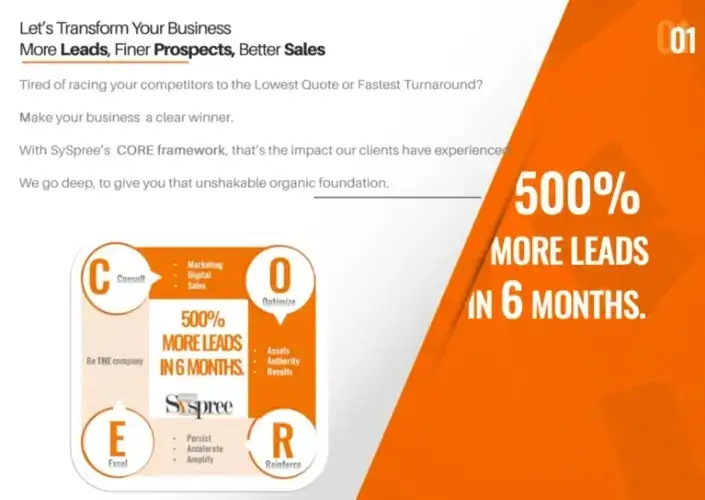
🚀 Want Results Like 500% More Leads in 4 Months?
Let’s talk about what these strategies can do for your business.
We’ll tailor a plan for your goals — no fluff, no pressure.
📧 Or just drop us a line at https://syspree.com/contact/
You may also like ( Author’s curated blogs for you) :
- Observations on Social Media’s Role in Corporate Services
- Why Skipping SEO Limits Corporate Service Growth: Unlocking the Untapped Potential
- The Ultimate Guide to Analyzing ROI of Digital Marketing in Corporate Services: Unlocking Success
- Unveiling Success: How Corporate Firms Scaled with Digital Marketing Revolution
- How to Create a Digital Marketing Plan for Corporate Services: A Comprehensive Guide for Success