15 Min to Identify Hidden Business Threats and Prevent Weak IT Risks Corporate
Introduction: Understanding the Impact of Weak IT Systems
Imagine running a successful corporate service firm generating over $20,000 in monthly revenue. Your business is expanding, customer expectations are increasing, and your employees depend on technology to deliver reliable services. However, as operations grow, outdated systems begin creating unexpected challenges.
Table of Contents
- Introduction: Understanding the Impact of Weak IT Systems
- The Ripple Effect of Fragile IT Systems
- The Financial Consequences of Weak IT Systems
- How Weak IT Systems Limit Business Scalability
- Actionable Solutions for Building Robust IT Infrastructure
- How to Identify Warning Signs of Weak IT Infrastructure
- How Strong IT Systems Create Competitive Advantage
- How SySpree Helps Businesses Strengthen IT Infrastructure
- A Practical IT Improvement Roadmap
- Conclusion: Secure Your Firm’s Future With Strong IT Systems
Slow applications, frequent downtime, security vulnerabilities, and disconnected platforms can gradually damage productivity and customer confidence. Understanding Weak IT Risks Corporate is essential for businesses seeking sustainable growth and operational stability.
Technology problems are not always immediately visible. A minor system failure can interrupt communication, delay projects, or prevent employees from accessing important information. Recognizing Weak IT Risks Corporate early allows organizations to address weaknesses before they develop into costly operational disruptions.
This article explores how fragile IT systems affect corporate service firms and outlines practical strategies for building secure, scalable, and reliable technology infrastructure.
The Ripple Effect of Fragile IT Systems
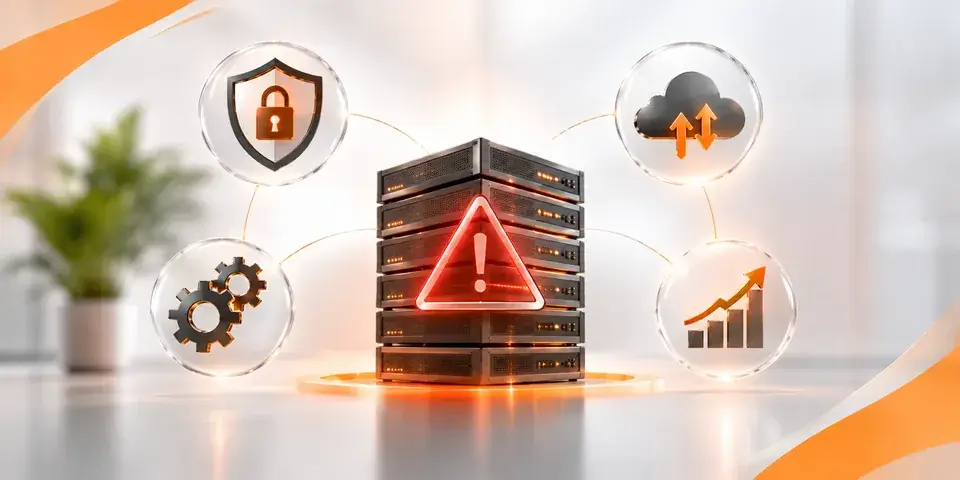
Corporate service firms depend on interconnected technology for communication, customer management, project delivery, financial operations, and data analysis.
When these systems become unreliable, the consequences can extend far beyond the IT department. Weak IT Risks Corporate operations by creating delays, increasing administrative workloads, and reducing the quality of customer experiences.
1. Operational Inefficiencies: The Invisible Profit Leaker
Imagine a project management application becoming unavailable during an important customer deadline. Employees lose access to essential information, communication slows, and project delivery becomes more difficult.
These disruptions can create unnecessary operational expenses and reduce employee productivity.
Understanding Weak IT Risks Corporate productivity helps business leaders identify the importance of dependable applications, reliable networks, and proactive technical management.
Common Operational Problems
- Frequent software crashes.
- Slow application performance.
- Unplanned system downtime.
- Disconnected business applications.
- Repeated manual data entry.
- Delayed customer responses.
Introducing Performance Monitoring can help IT teams observe application behaviour, system availability, and infrastructure capacity.
2. Client Trust and Reputation: A Delicate Balance
Corporate service firms build long-term relationships through reliability, confidentiality, and consistent service delivery.
When technology repeatedly fails, customers may begin questioning whether the organization can manage important projects and protect sensitive information.
Weak IT Risks Corporate reputation when operational failures create repeated customer frustration, missed commitments, or concerns about data protection.
How Technology Problems Affect Customer Relationships
- Missed project deadlines.
- Delayed responses to enquiries.
- Inconsistent service quality.
- Reduced confidence in business reliability.
- Potential loss of repeat business.
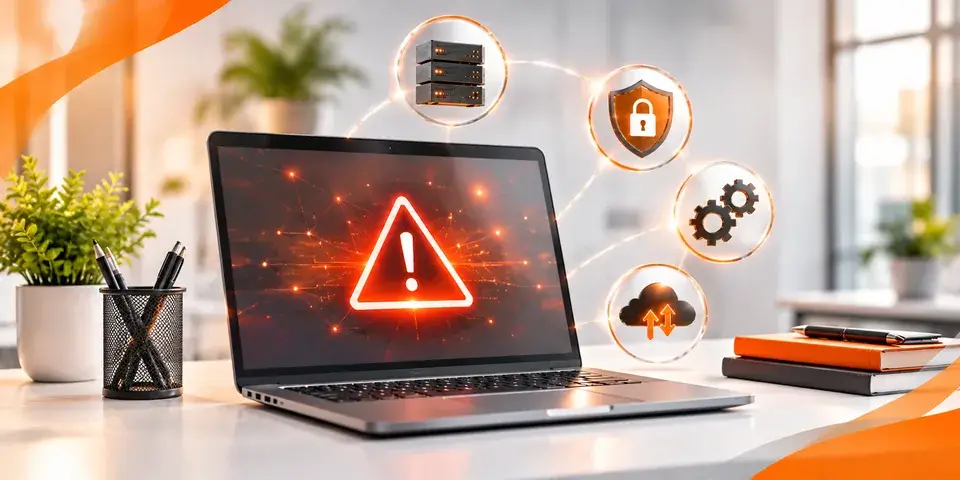
Illustrative Scenario: ABC Consulting Faces an IT Crisis
Consider ABC Consulting, a hypothetical midsized professional services company that continues using outdated software and inconsistent security practices.
An attacker exploits an unpatched system, disrupting access to confidential project information. Employees struggle to restore operations, while management must address customer concerns.
This scenario demonstrates how Weak IT Risks Corporate continuity and customer trust when businesses postpone essential infrastructure improvements.
3. Security Risks: The Silent Threat
Outdated applications, poorly configured networks, weak passwords, and excessive user permissions can expose businesses to unauthorized access and cyberattacks.
Corporate service firms frequently manage confidential contracts, financial records, employee information, and customer data, making information protection particularly important.
Weak IT Risks Corporate security when organizations lack appropriate safeguards against evolving digital threats.
Common Cybersecurity Threats
- Phishing attacks.
- Ransomware infections.
- Unauthorized account access.
- Data breaches.
- Malicious software.
- Unpatched software vulnerabilities.
Cybersecurity Solutions such as multi-factor authentication, endpoint protection, access controls, and network monitoring can help reduce exposure to these threats.
The Financial Consequences of Weak IT Systems
Technology failures can create direct and indirect financial consequences. Beyond immediate repair expenses, businesses may experience interrupted revenue, employee downtime, customer dissatisfaction, and additional administrative costs.
Understanding Weak IT Risks Corporate profitability requires examining the broader financial impact of unreliable technology.
Potential Financial Impacts
- Lost productivity during outages.
- Emergency technical support expenses.
- Delayed project completion.
- Customer retention challenges.
- Data recovery costs.
- Additional security remediation expenses.
Preventative infrastructure planning can often be more manageable than responding to repeated unexpected failures.
How Weak IT Systems Limit Business Scalability
As corporate firms grow, their systems must support additional employees, customers, applications, and information.
Technology environments designed for smaller workloads may struggle when demand increases significantly.
Weak IT Risks Corporate expansion when infrastructure cannot scale efficiently with business requirements.
Warning Signs of Limited Scalability
- Applications slowing as user numbers increase.
- Storage capacity becoming insufficient.
- Frequent infrastructure upgrades.
- Difficulty integrating new software.
- Limited remote access capabilities.
- Increasing technical maintenance requirements.
Actionable Solutions for Building Robust IT Infrastructure
1. Implement Scalable IT Solutions
Scalable technology allows businesses to increase resources as workloads grow without repeatedly rebuilding their entire infrastructure.
Cloud-based environments and flexible computing resources can help organizations respond more effectively to changing operational requirements.
Addressing Weak IT Risks Corporate scalability begins with selecting systems capable of supporting both current business needs and future expansion.
Benefits of Scalable Infrastructure
- Greater operational flexibility.
- Improved resource allocation.
- Better support for growing teams.
- Reduced dependence on outdated hardware.
- Faster deployment of additional capacity.

2. Prioritize Regular IT Audits and Maintenance
Routine technology assessments help organizations identify outdated software, configuration weaknesses, capacity limitations, and security vulnerabilities.
Regular maintenance also supports application reliability and reduces the likelihood of preventable disruptions.
Reducing Weak IT Risks Corporate operations requires businesses to review infrastructure continuously rather than waiting until serious failures occur.
Important IT Audit Activities
- Review application performance.
- Identify outdated software.
- Evaluate network configurations.
- Assess security controls.
- Review backup procedures.
- Identify infrastructure bottlenecks.
3. Strengthen Cybersecurity Measures
Cybersecurity should be integrated into infrastructure planning rather than introduced only after an incident occurs.
Businesses should establish appropriate access controls, authentication requirements, software updates, security monitoring, and incident response procedures.
Cybersecurity Solutions can help organizations reduce Weak IT Risks Corporate information assets by strengthening protection against unauthorized access and malicious activity.
Recommended Security Practices
- Enable multi-factor authentication.
- Apply security updates regularly.
- Restrict access to sensitive information.
- Use endpoint protection.
- Train employees to recognize phishing attempts.
- Establish incident response procedures.
4. Develop Reliable Backup and Recovery Procedures
Unexpected system failures, cyber incidents, and accidental deletion can make important information temporarily unavailable.
Backup Services help businesses maintain recoverable copies of critical information.
Reducing Weak IT Risks Corporate continuity requires backup strategies that include appropriate schedules, protected storage, and regular restoration testing.
Important Backup Considerations
- Identify critical business data.
- Determine suitable backup frequency.
- Protect backup copies from unauthorized access.
- Establish recovery objectives.
- Test restoration procedures.
- Document recovery responsibilities.
5. Embrace Digital Transformation
Digital transformation involves improving how organizations use technology to deliver services, manage information, and support employees.
Modern applications, connected platforms, cloud infrastructure, and intelligent automation can reduce unnecessary manual processes.
Businesses can address Weak IT Risks Corporate efficiency by modernizing outdated systems and creating more connected digital workflows.
Potential Digital Transformation Opportunities
- Modernizing legacy applications.
- Connecting business systems.
- Automating repetitive processes.
- Improving customer management platforms.
- Introducing cloud-based collaboration.
- Strengthening operational reporting.
6. Train Employees and Build IT Awareness
Employees play an important role in maintaining secure and reliable technology environments.
Training should help staff understand appropriate system usage, password protection, phishing awareness, data handling, and incident reporting.
Addressing Weak IT Risks Corporate operations also requires employees to recognize technical problems early and report them through established support procedures.
7. Establish Continuous Performance Monitoring
Technology environments change as organizations introduce new applications, employees, and workloads.
Performance Monitoring helps businesses track system health, application response times, infrastructure capacity, and operational anomalies.
Proactive monitoring reduces Weak IT Risks Corporate reliability by allowing technical teams to investigate emerging issues before they develop into major disruptions.
8. Create a Business Continuity Plan
A business continuity plan explains how an organization will maintain essential operations during unexpected technology disruptions.
It should identify critical systems, responsible employees, communication procedures, alternative working arrangements, and recovery priorities.
Preparing for Weak IT Risks Corporate business continuity helps organizations respond more effectively when unexpected incidents occur.

How to Identify Warning Signs of Weak IT Infrastructure
Many technology problems develop gradually. Recognizing early warning signs allows businesses to take corrective action before performance deteriorates significantly.
Signs Your Business May Need an IT Upgrade
- Employees regularly complain about slow systems.
- Applications crash or become unavailable frequently.
- Important information is stored across disconnected platforms.
- Software updates are repeatedly postponed.
- Backups are not tested.
- Technical problems require frequent emergency repairs.
- New applications are difficult to integrate.
- IT spending increases without clear performance improvements.
Recognizing these indicators is an important step toward addressing Weak IT Risks Corporate productivity and operational resilience.
How Strong IT Systems Create Competitive Advantage
Reliable technology does more than prevent disruptions. It can improve collaboration, strengthen customer experiences, support business intelligence, and enable future expansion.
Organizations that actively reduce Weak IT Risks Corporate operations can create a stronger foundation for innovation and long-term growth.
Potential Business Benefits
- Higher employee productivity.
- More consistent customer service.
- Reduced operational downtime.
- Improved information security.
- Greater scalability.
- More efficient business processes.
How SySpree Helps Businesses Strengthen IT Infrastructure
SySpree helps organizations evaluate technology requirements, identify operational inefficiencies, and develop digital strategies aligned with business objectives.
Our approach to reducing Weak IT Risks Corporate performance begins with understanding the organization’s existing systems, operational challenges, security requirements, and growth plans.
Important Areas for IT Improvement
- Infrastructure assessment.
- Technology modernization.
- Cybersecurity Solutions.
- Performance Monitoring.
- Backup Services.
- Business continuity planning.
- Employee technology awareness.
Businesses should prioritize improvements that address measurable operational risks and create sustainable value.
A Practical IT Improvement Roadmap
- Assess: Review existing infrastructure and identify technical weaknesses.
- Prioritize: Address systems creating the greatest operational risk.
- Secure: Strengthen authentication, access controls, and security monitoring.
- Modernize: Replace outdated applications and infrastructure where necessary.
- Protect: Establish reliable backup and recovery procedures.
- Train: Improve employee technology awareness.
- Monitor: Track system performance and emerging issues.
- Optimize: Review infrastructure as business requirements evolve.

Conclusion: Secure Your Firm’s Future With Strong IT Systems
Weak technology infrastructure can create serious challenges for corporate service firms, including operational inefficiencies, security vulnerabilities, customer dissatisfaction, and limited scalability.
Understanding Weak IT Risks Corporate growth allows business leaders to recognize that reliable technology is an essential investment rather than an optional expense.
By modernizing outdated systems, strengthening cybersecurity, improving employee awareness, and establishing proactive monitoring, organizations can create more dependable digital operations.
Addressing Weak IT Risks Corporate performance today can help businesses protect customer relationships, reduce unnecessary disruptions, and prepare for sustainable expansion.
Ready to strengthen your IT infrastructure? Contact SySpree today to explore technology solutions aligned with your operational challenges and long-term business goals.
🚀 Want Results Like 500% More Leads in 4 Months?
Let’s talk about what these strategies can do for your business.
We’ll tailor a plan for your goals — no fluff, no pressure.
📧 Or just drop us a line at https://syspree.com/contact/
You may also like ( Author’s curated blogs for you) :
- Analyzing the Role of IT in Corporate Service Security: A Must for Thriving SMEs
- How Corporate Firms are Transforming Success Through IT: Real Stories and Proven Strategies
- Building a Robust IT Infrastructure for Corporate Services: A Roadmap to Enterprise Success
- 8 AI Solutions Revolutionizing the Corporate Services Industry
- The Future of Artificial Intelligence in Corporate Services: Unlocking New Horizons