15 Min to Explore Emerging Technologies and Strategies Shaping Corporate IT Future
Introduction: Preparing Corporate Firms for the Next Digital Era
In today’s rapidly evolving business landscape, technology is reshaping how corporate firms operate, compete, and deliver value. From artificial intelligence and cloud computing to advanced cybersecurity and intelligent data management, digital transformation is creating new opportunities for businesses of every size.
Table of Contents
- Introduction: Preparing Corporate Firms for the Next Digital Era
- Major IT Trends Shaping Corporate Services Beyond 2026
- Converting Technology Challenges Into Business Opportunities
- Building Scalable IT Infrastructure for Long-Term Growth
- The Importance of Responsible AI Adoption
- How SMEs Can Prepare for IT Transformation Beyond 2026
- Technology Trends Corporate Leaders Should Continue Monitoring
- How SySpree Supports Future-Ready Corporate IT Strategies
- Key Takeaways for Corporate Decision-Makers
- Conclusion: Embrace Change and Prepare for the Future
For small and medium-sized enterprises (SMEs), understanding the Corporate IT Future is essential for maintaining competitiveness, improving operational efficiency, and preparing for long-term growth.
As businesses move beyond 2026, technology decisions will increasingly influence customer experiences, employee productivity, operational resilience, and strategic planning.
The Corporate IT Future will reward organizations that adopt emerging technologies thoughtfully while maintaining secure, scalable, and adaptable business operations.
This article explores the major technology trends shaping corporate services, the challenges businesses may encounter, and actionable strategies for building future-ready IT environments.
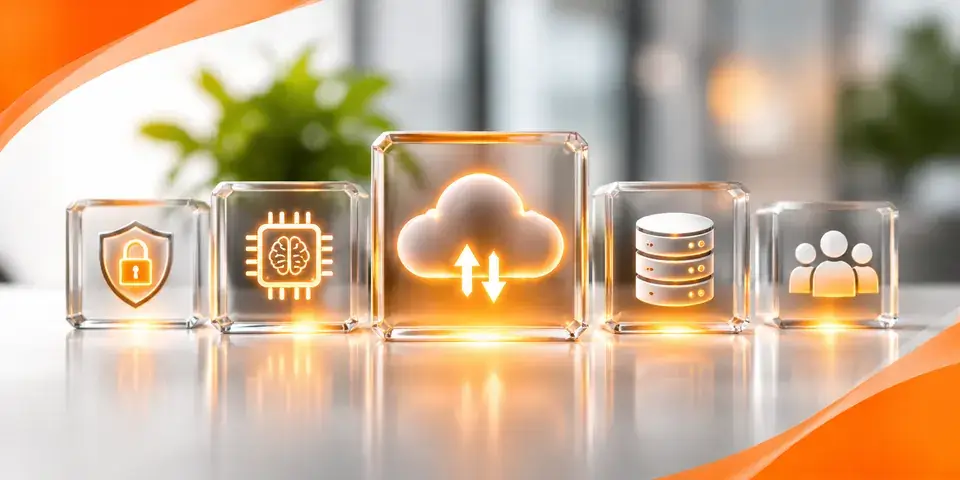
Major IT Trends Shaping Corporate Services Beyond 2026
1. Artificial Intelligence: From Automation to Intelligent Decision-Making
Artificial intelligence is transforming business operations by helping organizations automate repetitive activities, analyze information, and support complex decision-making.
Rather than focusing exclusively on routine task automation, businesses are exploring how intelligent systems can improve customer interactions, operational planning, and internal workflows.
The Corporate IT Future will increasingly involve integrating AI capabilities into existing business processes where they provide measurable value.
How AI Can Improve Corporate Operations
- Automating repetitive administrative tasks.
- Supporting customer service interactions.
- Analyzing operational information.
- Improving document processing.
- Identifying unusual business patterns.
- Assisting employees with routine research and reporting.
AI-Powered Automation can help organizations reduce manual workloads and improve workflow consistency while allowing employees to concentrate on responsibilities requiring human judgment.
Illustrative Business Scenario
Consider a hypothetical corporate services company receiving hundreds of customer enquiries every week. Employees spend considerable time categorizing requests and forwarding them to appropriate departments.
By introducing intelligent request classification and automated routing, the organization could improve response coordination and reduce unnecessary administrative work.
This example illustrates how the Corporate IT Future can combine intelligent technology with human expertise to create more responsive business operations.
2. Cloud Computing: Building Flexible Digital Infrastructure
Cloud computing continues to influence how businesses store information, deploy applications, collaborate, and manage technology resources.
Instead of depending entirely on physical infrastructure, organizations can use cloud environments to access computing resources according to operational requirements.
The Corporate IT Future will likely involve increasingly flexible combinations of cloud, on-premises, and hybrid technology environments.
Benefits of Cloud Technology
- Flexible computing capacity.
- Support for distributed teams.
- Improved access to business applications.
- Faster deployment of digital services.
- Reduced dependence on certain physical infrastructure investments.
- Greater flexibility during business expansion.
Cloud Based Applications can support collaboration, customer management, financial operations, project coordination, and other essential business activities.
Cloud Adoption Considerations
Businesses should evaluate cloud solutions according to security requirements, total costs, integration capabilities, data protection obligations, and operational reliability.
Preparing for the Corporate IT Future requires selecting cloud environments that support business objectives rather than migrating systems without a clear implementation strategy.

3. Cybersecurity: Protecting an Increasingly Connected Business
As corporate firms introduce new applications, connected devices, and remote working arrangements, their technology environments become more complex.
These developments create opportunities for innovation but can also introduce additional security risks.
Cybersecurity will remain a central priority in the Corporate IT Future because businesses must protect sensitive information, maintain customer trust, and respond effectively to emerging threats.
Important Cybersecurity Priorities
- Identity and access management.
- Multi-factor authentication.
- Endpoint protection.
- Secure cloud configurations.
- Network monitoring.
- Incident response planning.
- Employee security awareness.
Cybersecurity Solutions can help organizations establish layered protection through appropriate authentication, access controls, vulnerability management, and threat detection.
Why Zero-Trust Principles Matter
Zero-trust security approaches emphasize verifying access requests and limiting permissions according to legitimate business needs.
Organizations preparing for the Corporate IT Future should evaluate how identity verification, least-privilege access, and continuous security assessment can strengthen their technology environments.
4. Data Analytics: Turning Information Into Business Intelligence
Modern businesses generate substantial information through customer interactions, financial transactions, websites, operational systems, and digital platforms.
However, collecting information alone does not guarantee better decisions.
The Corporate IT Future will increasingly depend on organizations converting reliable data into practical insights that support strategic planning.
Data Science and Analytics can help businesses identify trends, evaluate performance, understand customer requirements, and improve resource allocation.
Important Applications of Business Analytics
- Customer behaviour analysis.
- Revenue forecasting.
- Operational performance evaluation.
- Resource planning.
- Customer retention analysis.
- Business trend identification.
Illustrative Business Scenario
Imagine a growing professional services company struggling to understand why certain projects consistently exceed their estimated timelines.
By analyzing project records, employee workloads, and delivery patterns, management could identify recurring bottlenecks and improve resource planning.
Data-driven decision-making will be an important characteristic of the Corporate IT Future, particularly for businesses seeking to improve efficiency without unnecessary expansion of operating costs.
Converting Technology Challenges Into Business Opportunities
5. Managing Increasing Technological Complexity
As businesses adopt additional applications, platforms, and connected systems, managing the overall technology environment becomes more demanding.
Organizations may struggle with incompatible software, duplicated information, inconsistent processes, and growing maintenance requirements.
Successfully navigating the Corporate IT Future requires businesses to establish clear technology standards and prioritize integration across important systems.
Practical Strategies for Managing Complexity
- Review existing applications regularly.
- Identify overlapping software functions.
- Document important system dependencies.
- Establish clear technology ownership.
- Evaluate integration requirements before purchasing new software.
- Retire outdated systems when appropriate.

6. Supporting Remote and Hybrid Collaboration
Many corporate firms now operate across multiple locations or support employees working remotely.
Maintaining effective collaboration requires reliable communication platforms, secure access to business information, and consistent project management processes.
The Corporate IT Future will continue to emphasize digital workplaces that support productivity without compromising information security.
Essential Collaboration Capabilities
- Secure document sharing.
- Reliable video communication.
- Centralized project coordination.
- Controlled access to company applications.
- Clear communication procedures.
- Appropriate device security.
7. Addressing Technology Skills Gaps
Emerging technologies require new capabilities in areas such as AI implementation, cloud management, data analysis, and cybersecurity.
Smaller organizations may find it difficult to recruit specialists for every technology discipline.
Preparing for the Corporate IT Future involves identifying essential skills, training employees, and evaluating when external expertise may be appropriate.
Practical Workforce Development Strategies
- Assess existing employee capabilities.
- Identify future technology requirements.
- Provide role-specific digital training.
- Encourage cross-functional collaboration.
- Establish responsible AI usage policies.
- Review technical skills regularly.
Building Scalable IT Infrastructure for Long-Term Growth
As corporate firms expand, their technology infrastructure must accommodate additional employees, customers, applications, and information.
Infrastructure that performs adequately today may become inefficient as workloads increase.
A scalable Corporate IT Future strategy should evaluate computing capacity, network reliability, application performance, storage requirements, and recovery capabilities.
Important Infrastructure Considerations
- Application scalability.
- Network capacity.
- Cloud resource management.
- Data storage requirements.
- Business continuity planning.
- Technology maintenance.

The Importance of Responsible AI Adoption
Artificial intelligence offers significant opportunities, but organizations should introduce it with appropriate oversight and clearly defined objectives.
AI-generated outputs may contain errors, reflect incomplete information, or create privacy concerns when sensitive data is handled improperly.
The Corporate IT Future will require businesses to balance automation benefits with transparency, security, accuracy, and human accountability.
Responsible AI Implementation Practices
- Define appropriate AI use cases.
- Protect confidential information.
- Validate important AI-generated outputs.
- Maintain human oversight for significant decisions.
- Monitor system performance.
- Review potential operational risks.
How SMEs Can Prepare for IT Transformation Beyond 2026
Businesses generating more than $20,000 in monthly revenue may have growing technology requirements but limited resources for large-scale transformation.
Rather than introducing every emerging technology simultaneously, organizations should prioritize improvements according to business impact.
A practical Corporate IT Future roadmap helps companies introduce technology gradually while maintaining operational stability.
Step 1: Assess Existing Technology
Review current infrastructure, applications, security controls, employee capabilities, and operational challenges.
Step 2: Identify Business Priorities
Determine which technology improvements could provide the greatest value through efficiency, reliability, customer experience, or risk reduction.
Step 3: Develop a Technology Roadmap
Establish implementation priorities, budgets, responsibilities, timelines, and measurable objectives.
Step 4: Introduce Technology Gradually
Begin with manageable initiatives and evaluate their effectiveness before expanding implementation.
Step 5: Train Employees
Provide practical training to help staff understand new applications, security requirements, and digital workflows.
Step 6: Measure Business Outcomes
Evaluate productivity, system reliability, customer experiences, and operational costs.
Step 7: Optimize Continuously
Review technology performance and adjust strategies as business requirements evolve.
Following these steps can help organizations approach the Corporate IT Future with greater confidence and clearer business objectives.
Technology Trends Corporate Leaders Should Continue Monitoring
Beyond established technologies, several developments may influence how businesses operate in the coming years.
Emerging Areas of Interest
- AI-assisted operations: Intelligent tools supporting selected business workflows.
- Advanced cloud architecture: Flexible infrastructure designed around changing workloads.
- Identity-focused security: Stronger authentication and access management.
- Connected business systems: Improved information exchange across applications.
- Intelligent analytics: Faster identification of meaningful operational patterns.
- Energy-aware computing: Greater attention to resource efficiency.
Monitoring these developments can help businesses identify opportunities relevant to their specific industry and operational needs.
How SySpree Supports Future-Ready Corporate IT Strategies
SySpree helps businesses evaluate digital opportunities, identify operational challenges, and develop technology strategies aligned with long-term objectives.
Our approach to the Corporate IT Future focuses on understanding each organization’s existing systems, growth plans, customer expectations, and technology requirements.
Important Areas for Digital Transformation Planning
- AI-Powered Automation.
- Cloud Based Applications.
- Cybersecurity Solutions.
- Data Science and Analytics.
- Technology environment assessment.
- Business workflow evaluation.
- Digital transformation planning.
- Operational improvement strategies.
By aligning technology investments with practical business objectives, organizations can improve their ability to adapt to changing market conditions.
Key Takeaways for Corporate Decision-Makers
Technology transformation requires more than adopting the latest applications. Businesses need clear objectives, secure infrastructure, capable employees, and continuous performance evaluation.
The Corporate IT Future will favour organizations that combine innovation with disciplined implementation and measurable business outcomes.
Five Priorities for Business Leaders
- Invest in technology that addresses genuine business problems.
- Strengthen cybersecurity as digital operations expand.
- Use data to support strategic decisions.
- Develop flexible infrastructure for future growth.
- Prepare employees for evolving technology requirements.
Conclusion: Embrace Change and Prepare for the Future
The evolution of corporate IT beyond 2026 presents both opportunities and challenges for businesses seeking sustainable growth.
Artificial intelligence, cloud computing, cybersecurity, and advanced analytics are reshaping how organizations manage information, support employees, and deliver services.
Understanding the Corporate IT Future allows business leaders to evaluate these developments strategically rather than adopting technology without a clear purpose.
By investing in secure infrastructure, responsible automation, data-driven planning, and employee development, organizations can build more adaptable and resilient operations.
Preparing for the Corporate IT Future today can help corporate firms strengthen their competitive position and respond more effectively to the opportunities emerging beyond 2026.
Ready to future-proof your corporate IT strategy? Contact SySpree today to explore technology solutions aligned with your business goals and digital transformation requirements.
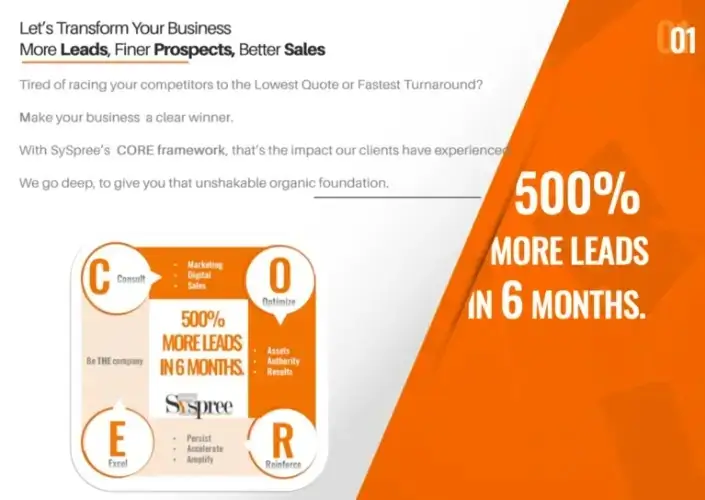
🚀 Want Results Like 500% More Leads in 4 Months?
Let’s talk about what these strategies can do for your business.
We’ll tailor a plan for your goals — no fluff, no pressure.
📧 Or just drop us a line at https://syspree.com/contact/
You may also like ( Author’s curated blogs for you) :
- In-house IT vs. Managed IT: Which Works Best for Corporate Firms?
- Unlocking Growth: IT Adoption in Corporate Services for Tomorrow’s Leaders
- Why Weak IT Systems Undermine Corporate Service Firms: A Deep Dive into Solutions
- Analyzing the Role of IT in Corporate Service Security: A Must for Thriving SMEs
- How Corporate Firms are Transforming Success Through IT: Real Stories and Proven Strategies