

15 Min to Discover Proven Success Strategies Driving Outsourcing Corporate Growth
Introduction: How Outsourcing Is Transforming Corporate Business Growth
In today’s competitive business environment, corporate service firms must continuously find ways to improve efficiency, expand their capabilities, and deliver exceptional customer experiences. As businesses grow, managing every operational function internally can become increasingly expensive and complicated.
Table of Contents
- Introduction: How Outsourcing Is Transforming Corporate Business Growth
- Outsourcing: A Strategic Catalyst for Corporate Business Expansion
- Success Story 1: Improving Operational Efficiency Through Outsourcing
- Success Story 2: Accessing Specialized Talent for Better Digital Experiences
- Success Story 3: Supporting Business Expansion Through External IT Expertise
- Success Story 4: Expanding Customer Reach Through Digital Marketing
- What These Outsourcing Success Stories Teach Corporate Firms
- The Hidden Costs of Managing Everything In-House
- How to Develop an Effective Corporate Outsourcing Strategy
- Important KPIs for Measuring Outsourcing Success
- Common Outsourcing Challenges and How to Overcome Them
- How SySpree Supports Corporate Business Expansion
- Building a Sustainable Outsourcing Model for the Future
- Conclusion: Transform Business Growth Through Strategic Outsourcing
For small and medium-sized enterprises (SMEs) generating more than $20,000 in monthly revenue, Outsourcing Corporate Growth has emerged as a strategic approach to improving operational flexibility and accessing specialized expertise.
Outsourcing is no longer simply about reducing expenses. It can help businesses strengthen service delivery, accelerate projects, and create additional capacity for innovation.
Understanding how Outsourcing Corporate Growth works allows decision-makers to evaluate external partnerships according to their business objectives rather than focusing exclusively on cost savings.
In this article, we explore illustrative corporate outsourcing success stories, the strategies behind them, common implementation challenges, and practical lessons businesses can apply to their own growth plans.

Outsourcing: A Strategic Catalyst for Corporate Business Expansion
As organizations expand, they often encounter increasing demands for technical expertise, customer support, marketing execution, and administrative coordination.
Hiring full-time specialists for every requirement may create additional fixed expenses and management responsibilities.
Outsourcing Corporate Growth offers an alternative by allowing businesses to delegate suitable functions to external professionals while retaining control over strategic decisions.
Why Businesses Consider Outsourcing
- Access to specialized professional expertise.
- Greater flexibility in managing operational capacity.
- Reduced pressure on internal employees.
- Opportunities to improve service consistency.
- Additional resources for strategic business activities.
- Faster access to certain technical capabilities.
The effectiveness of Outsourcing Corporate Growth depends on selecting appropriate responsibilities, establishing clear performance expectations, and maintaining effective communication between internal and external teams.
Success Story 1: Improving Operational Efficiency Through Outsourcing
The Challenge: Rising Costs and Overloaded Internal Teams
Consider a hypothetical midsized technology company, ABC Corp, experiencing steady customer growth but struggling with increasing administrative responsibilities.
Its internal employees manage customer enquiries, routine documentation, technical requests, and operational reporting alongside their primary responsibilities.
As workloads increase, management notices delays in customer communication and reduced employee availability for product development.
The Solution: Delegating Selected Support Functions
The company introduces a structured Outsourcing Corporate Growth strategy by transferring suitable administrative activities and routine customer enquiries to an external provider.
Through Customer Support Outsourcing, the organization establishes documented response procedures, escalation guidelines, and service quality standards.
Internal employees remain responsible for complex customer issues and important product decisions.
The Potential Business Impact
With routine responsibilities handled through a dedicated external arrangement, employees could devote more attention to product improvements, customer relationships, and strategic projects.
This scenario demonstrates how Outsourcing Corporate Growth can create additional operational capacity without requiring every function to expand internally.
Key Takeaway
Outsourcing can be particularly valuable when repetitive operational responsibilities prevent employees from concentrating on high-value business activities.
Success Story 2: Accessing Specialized Talent for Better Digital Experiences
The Challenge: Limited Internal Design Capabilities
Imagine XYZ Enterprises, a hypothetical digital services company expanding into new customer markets.
The business wants to improve its digital platforms but lacks sufficient internal design expertise to manage additional projects.
Recruiting a complete specialist team would require time, training, and additional operating expenses.

The Solution: Engaging External Design Specialists
XYZ Enterprises adopts an Outsourcing Corporate Growth approach by collaborating with experienced external designers.
The organization uses professional UI/UX Design expertise to improve website navigation, user journeys, accessibility considerations, and digital interactions.
Internal project managers continue to oversee customer requirements, brand guidelines, and delivery expectations.
The Potential Business Impact
Access to specialist capabilities could help the company deliver more consistent digital experiences and manage additional projects without immediately building a large internal design department.
By using Outsourcing Corporate Growth strategically, businesses can expand their service capabilities while maintaining appropriate oversight of quality and customer expectations.
Key Takeaway
External specialists can help organizations address capability gaps when internal recruitment is expensive, slow, or impractical.
Success Story 3: Supporting Business Expansion Through External IT Expertise
The Challenge: Increasing Technology Complexity
Consider DEF Logistics, a hypothetical distribution company expanding operations across multiple locations.
As the organization grows, its technology requirements become more demanding. Employees need reliable access to operational systems, secure information sharing, and consistent technical support.
The internal IT team struggles to manage growing workloads while maintaining existing infrastructure.
The Solution: Introducing Specialized IT Support
DEF Logistics evaluates Outsourcing Corporate Growth as part of its broader expansion strategy.
Through IT Outsourcing Services, the company engages external specialists for selected infrastructure management, technical troubleshooting, and system administration responsibilities.
Management establishes clear service agreements, access controls, reporting requirements, and escalation procedures.
The Potential Business Impact
External technical expertise could help the organization manage increasing infrastructure demands and improve the consistency of technical support across locations.
For expanding firms, Outsourcing Corporate Growth can provide additional flexibility when technology requirements exceed existing internal capacity.
Key Takeaway
Businesses should evaluate technology outsourcing according to service reliability, security, scalability, and total operating costs rather than relying exclusively on vendor pricing.
Success Story 4: Expanding Customer Reach Through Digital Marketing
The Challenge: Limited Online Visibility
Imagine GHI Consultancy, a hypothetical corporate consulting firm with strong professional expertise but limited digital visibility.
The organization relies heavily on referrals and existing customer relationships to generate new business.
Although management recognizes the importance of digital marketing, its internal employees lack sufficient time to plan campaigns, improve website content, and evaluate marketing performance.
The Solution: Outsourcing Digital Marketing Activities
GHI Consultancy introduces an Outsourcing Corporate Growth initiative focused on improving digital customer acquisition.
Through Digital Marketing Outsourcing, the company engages external specialists to support campaign planning, content development, search visibility improvements, and performance reporting.
The internal leadership team continues to define brand positioning, target audiences, and commercial objectives.
The Potential Business Impact
A coordinated digital marketing strategy could improve the company’s ability to reach relevant audiences, communicate its expertise, and generate qualified enquiries.
This example illustrates how Outsourcing Corporate Growth can support market expansion when external capabilities are aligned with measurable business objectives.

Key Takeaway
Marketing outsourcing should be evaluated through meaningful outcomes such as qualified enquiries, customer acquisition costs, and conversion performance rather than visibility metrics alone.
What These Outsourcing Success Stories Teach Corporate Firms
Although each illustrative scenario involves different operational challenges, several common principles emerge.
1. Outsource According to Business Priorities
Businesses should identify functions that consume substantial resources but do not necessarily require direct internal execution.
Effective Outsourcing Corporate Growth begins with understanding the organization’s competitive strengths and operational limitations.
2. Maintain Internal Accountability
External providers can manage selected activities, but the business remains responsible for customer relationships, strategic direction, contractual obligations, and important decisions.
3. Establish Measurable Performance Standards
Clear service expectations make it easier to evaluate quality, identify problems, and determine whether an outsourcing arrangement delivers value.
4. Build Strong Communication Processes
Regular reporting, documented responsibilities, and transparent feedback help internal and external teams coordinate effectively.
5. Review Results Continuously
A successful Outsourcing Corporate Growth strategy should evolve as customer requirements, operational workloads, and business priorities change.
The Hidden Costs of Managing Everything In-House
Some organizations prefer to maintain complete internal control over every business function.
Although this approach can be appropriate for strategically sensitive activities, it may create challenges when specialist requirements exceed available resources.
Common In-House Operational Challenges
- Increasing recruitment and training expenses.
- Difficulty accessing specialized expertise.
- Higher management workloads.
- Limited flexibility during demand fluctuations.
- Delays in completing technical projects.
- Reduced employee availability for strategic activities.
For some businesses, evaluating Outsourcing Corporate Growth can reveal opportunities to improve resource allocation and reduce unnecessary operational complexity.
Illustrative Example: Delayed Technology Development
Consider a hypothetical manufacturing company that decides to manage all software development internally despite having limited technical expertise.
The organization experiences project delays because employees require additional training and management must divide attention between technology implementation and daily operations.
Engaging suitable external specialists might have helped the company address specific capability gaps more efficiently.
However, outsourcing is not automatically the best option. The decision should consider confidentiality, intellectual property, internal capabilities, cost, and long-term strategic importance.
How to Develop an Effective Corporate Outsourcing Strategy
Step 1: Evaluate Existing Business Processes
Review current operations to identify repetitive activities, performance bottlenecks, specialist skill shortages, and areas experiencing increasing costs.
Step 2: Identify Suitable Outsourcing Opportunities
Determine which functions can be managed externally without compromising critical business capabilities or customer relationships.
Step 3: Select Qualified Service Providers
Evaluate potential partners according to relevant experience, technical capabilities, security controls, communication practices, and contractual transparency.
Step 4: Establish Clear Service Agreements
Document responsibilities, deliverables, timelines, quality standards, reporting procedures, and escalation requirements.
Step 5: Introduce a Pilot Project
Test the arrangement with a limited scope before transferring additional responsibilities.
Step 6: Monitor Performance
Track service quality, costs, customer experiences, and operational improvements using relevant performance indicators.
Step 7: Expand Gradually
When results support expansion, increase the scope of external responsibilities while maintaining appropriate internal oversight.
Following these steps helps organizations approach Outsourcing Corporate Growth systematically rather than transferring responsibilities without a clear implementation plan.

Important KPIs for Measuring Outsourcing Success
Performance measurement allows corporate firms to evaluate whether outsourcing arrangements contribute to business objectives.
| Performance Area | Suggested KPI | Business Purpose |
|---|---|---|
| Operational Efficiency | Processing turnaround time | Evaluate workflow improvements |
| Customer Support | Customer satisfaction score | Monitor service quality |
| Technology Support | Issue resolution time | Assess technical responsiveness |
| Digital Marketing | Qualified leads generated | Measure customer acquisition activity |
| Financial Performance | Total cost of service delivery | Evaluate operating expenses |
| Service Reliability | Agreement compliance rate | Monitor contractual performance |
Performance targets should reflect the organization’s baseline results, operational requirements, and agreed service expectations.
Common Outsourcing Challenges and How to Overcome Them
1. Communication Gaps
Different working arrangements, time zones, and communication practices can create misunderstandings.
Solution: Establish regular meetings, clear reporting structures, and documented communication expectations.
2. Inconsistent Service Quality
Without measurable standards, businesses may struggle to determine whether outsourced services meet customer expectations.
Solution: Define quality requirements and review performance regularly.
3. Data Security Concerns
External providers may require access to confidential information and important business systems.
Solution: Apply appropriate access controls, confidentiality agreements, and security assessments.
4. Unexpected Contract Costs
Additional service requests, implementation requirements, and contract changes can increase expenses.
Solution: Evaluate the complete pricing structure and establish clear procedures for approving additional work.
5. Excessive Vendor Dependence
Businesses may become overly reliant on a provider for critical knowledge or operational capabilities.
Solution: Maintain internal documentation, define transition procedures, and retain appropriate organizational expertise.
How SySpree Supports Corporate Business Expansion
SySpree helps organizations evaluate digital opportunities, strengthen their online presence, and develop technology strategies aligned with business objectives.
Our approach to Outsourcing Corporate Growth focuses on understanding each company’s operational requirements, customer expectations, available resources, and long-term goals.
Our Digital and Technology Service Portfolio
- Digital Marketing Outsourcing: Supporting digital campaign execution, marketing strategy, and online growth initiatives.
- IT Outsourcing Services: Exploring technical support and technology management requirements.
- UI/UX Design: Improving digital usability and customer experiences.
- Customer Support Outsourcing: Evaluating customer communication workflows and suitable support arrangements.
By aligning external expertise with practical business objectives, organizations can identify opportunities to improve efficiency, strengthen digital capabilities, and support sustainable expansion.
Building a Sustainable Outsourcing Model for the Future
Business requirements change as organizations introduce new services, enter additional markets, and serve larger customer bases.
A sustainable Outsourcing Corporate Growth model should provide sufficient flexibility to adapt to these changes without sacrificing service quality or management accountability.
Five Principles for Long-Term Success
- Prioritize business value: Outsource functions that support meaningful operational improvements.
- Choose partners carefully: Evaluate expertise, reliability, and contractual transparency.
- Maintain strategic control: Retain responsibility for important business decisions.
- Measure performance: Monitor costs, service quality, and customer outcomes.
- Improve continuously: Adjust outsourcing arrangements as business requirements evolve.
Conclusion: Transform Business Growth Through Strategic Outsourcing
Corporate service firms face increasing pressure to deliver quality services, manage operational costs, and respond to changing customer expectations.
The illustrative stories explored in this article demonstrate how outsourcing can help businesses address resource limitations, access specialist expertise, strengthen digital capabilities, and improve operational flexibility.
When implemented carefully, Outsourcing Corporate Growth can support business expansion by allowing internal teams to concentrate on their most important responsibilities.
However, successful outcomes require thoughtful planning, clear contracts, qualified partners, and consistent performance monitoring.
For SMEs seeking sustainable expansion, Outsourcing Corporate Growth offers a strategic opportunity to build more adaptable and efficient operations.
Ready to strengthen your business growth strategy? Contact SySpree today to explore digital and outsourcing solutions aligned with your business objectives.
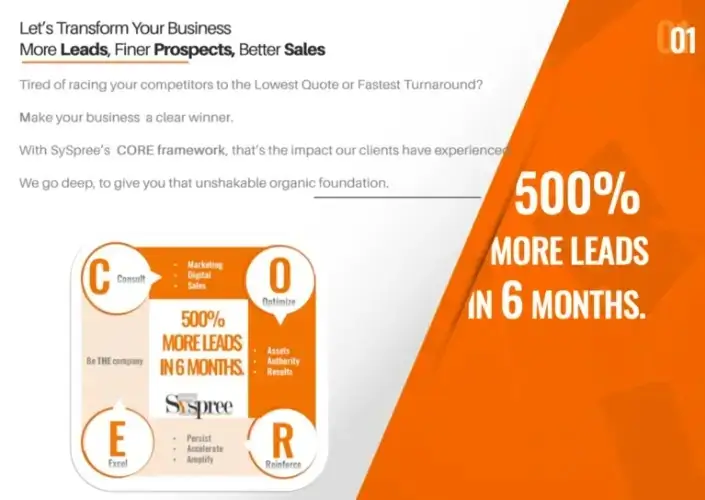
🚀 Want Results Like 500% More Leads in 4 Months?
Let’s talk about what these strategies can do for your business.
We’ll tailor a plan for your goals — no fluff, no pressure.
📧 Or just drop us a line at https://syspree.com/contact/
You may also like ( Author’s curated blogs for you) :
- How to Outsource Corporate Services for Efficiency and Scale: A Comprehensive Guide
- Unlocking Business Potential: 10 IT Best Practices for Corporate Services Growth
- The Future of IT in Corporate Services Beyond 2026: What Business Owners Need to Know
- In-house IT vs. Managed IT: Which Works Best for Corporate Firms?
- Unlocking Growth: IT Adoption in Corporate Services for Tomorrow’s Leaders