15 Min to Master Proven IT Strategies for Growth with Corporate IT Practices
Introduction: Why IT Best Practices Matter for Corporate Growth
In today’s fast-paced digital landscape, corporate service firms face increasing pressure to improve efficiency, protect sensitive information, and deliver exceptional customer experiences. As businesses expand, outdated technology, inefficient processes, and growing security threats can create obstacles that limit productivity and profitability.
Table of Contents
- Introduction: Why IT Best Practices Matter for Corporate Growth
- 1. Prioritize Cybersecurity to Protect Business Assets
- 2. Adopt Cloud Computing for Scalability and Flexibility
- 3. Implement Robust Data Management Strategies
- 4. Embrace IT Process Automation
- 5. Foster a Culture of IT Innovation
- 6. Optimize IT Infrastructure for Reliable Performance
- 7. Invest in Employee IT Training Programs
- 8. Implement a Comprehensive IT Disaster Recovery Plan
- 9. Adopt Sustainable and Green IT Practices
- 10. Engage With IT Strategy Consulting
- How to Implement IT Best Practices Successfully
- How SySpree Supports Corporate IT Growth
- Conclusion: Strengthen Corporate Growth Through Better IT
For small and medium-sized enterprises (SMEs), adopting effective Corporate IT Practices is essential for building reliable technology infrastructure and supporting sustainable business growth.
From cybersecurity and cloud computing to intelligent automation and disaster recovery, modern technology offers numerous opportunities to strengthen business operations.
Implementing strategic Corporate IT Practices helps organizations reduce operational inefficiencies, improve scalability, and prepare for changing market requirements.
This article explores 10 essential IT best practices that corporate service firms can adopt to improve productivity, strengthen security, and achieve long-term success.

1. Prioritize Cybersecurity to Protect Business Assets
Cybersecurity is one of the most important responsibilities for corporate service firms. Businesses regularly handle confidential customer information, financial records, employee details, and proprietary documents.
Without appropriate protection, these assets may become vulnerable to unauthorized access, malicious software, phishing attacks, and data breaches.
Strong Corporate IT Practices begin with establishing security policies and implementing protective controls across the organization’s digital environment.
Essential Cybersecurity Measures
- Enable multi-factor authentication.
- Implement strong access controls.
- Apply software security updates regularly.
- Conduct periodic vulnerability assessments.
- Train employees to recognize phishing attempts.
- Develop an incident response plan.
Cybersecurity Solutions such as endpoint protection, encryption, network monitoring, and identity management can help businesses reduce exposure to common digital threats.
Why Cybersecurity Matters
Security incidents can create financial losses, operational disruptions, regulatory complications, and reputational damage.
By prioritizing Corporate IT Practices focused on information protection, organizations can build stronger customer confidence and improve operational resilience.
2. Adopt Cloud Computing for Scalability and Flexibility
Cloud computing has transformed how businesses access applications, store information, and manage computing resources.
Instead of relying entirely on physical infrastructure, organizations can use cloud environments to support changing workloads and business requirements.
Cloud-focused Corporate IT Practices help SMEs improve flexibility while reducing dependence on certain on-premises technology investments.
Benefits of Cloud Computing
- Flexible computing capacity.
- Support for remote collaboration.
- Improved access to business applications.
- Faster deployment of digital services.
- Reduced dependence on physical infrastructure.
- Greater adaptability during business expansion.
Cloud Based Applications can support customer management, financial operations, project coordination, document sharing, and other essential business activities.
Illustrative Business Scenario
Consider a hypothetical professional services firm experiencing rapid growth across multiple locations.
By transitioning suitable applications to secure cloud environments, employees could access authorized information more efficiently and collaborate across offices.
This demonstrates how Corporate IT Practices involving cloud technology can support business expansion without unnecessary operational complexity.
3. Implement Robust Data Management Strategies
Corporate service firms generate substantial information through customer interactions, financial transactions, internal operations, and digital platforms.
Without effective data management, businesses may experience inaccurate reporting, duplicated records, inconsistent information, and inefficient decision-making.
Data-focused Corporate IT Practices help organizations maintain reliable information and establish appropriate policies for accessing, storing, and using business data.
Important Data Management Strategies
- Establish clear data governance policies.
- Define employee access permissions.
- Maintain accurate and consistent records.
- Use appropriate data storage systems.
- Review information retention requirements.
- Monitor data quality regularly.
Why Data Governance Matters
Reliable information allows management teams to evaluate business performance, identify operational challenges, and make informed strategic decisions.
Effective Corporate IT Practices ensure that information remains accessible to authorized employees while being protected against inappropriate use.

4. Embrace IT Process Automation
Many corporate firms continue to depend on manual activities for invoice processing, customer communication, document management, and administrative reporting.
These repetitive tasks can consume valuable employee time and increase the likelihood of avoidable errors.
Automation-oriented Corporate IT Practices help businesses streamline suitable workflows and allow employees to focus on higher-value responsibilities.
How Automation Supports Business Efficiency
AI-Powered Automation can help organizations classify customer requests, process routine documents, generate reports, and coordinate selected business activities.
Processes That May Benefit From Automation
- Invoice generation.
- Customer enquiry routing.
- Routine data entry.
- Appointment scheduling.
- Document classification.
- Operational notifications.
Illustrative Business Example
Imagine a consulting firm spending several hours each week preparing repetitive administrative reports.
By introducing suitable automation tools, the organization could reduce manual preparation time and allow employees to concentrate on customer projects.
Implementing Corporate IT Practices that support automation can improve workflow consistency and create opportunities for operational improvement.
5. Foster a Culture of IT Innovation
Technology innovation is not limited to introducing new software or upgrading hardware. It also involves encouraging employees to identify better ways of working.
Organizations that support experimentation, collaboration, and continuous improvement are better positioned to respond to changing business requirements.
Innovation-driven Corporate IT Practices encourage teams to evaluate new technologies according to their practical business value.
Ways to Encourage IT Innovation
- Promote collaboration between departments.
- Encourage employees to suggest improvements.
- Evaluate emerging technology opportunities.
- Test new processes through small pilot projects.
- Collect employee feedback.
- Measure the results of technology initiatives.
Why Innovation Matters
Businesses that continuously improve their technology environments may become more adaptable, productive, and responsive to customer expectations.
Maintaining Corporate IT Practices that support responsible innovation helps organizations prepare for future operational challenges.
6. Optimize IT Infrastructure for Reliable Performance
As corporate firms grow, their infrastructure must support additional employees, applications, customers, and information.
Outdated hardware, poorly configured networks, and inefficient applications can create performance problems that affect productivity.
Infrastructure-focused Corporate IT Practices help businesses identify technical bottlenecks and maintain reliable operations.
Important Infrastructure Optimization Activities
- Review system performance regularly.
- Apply software updates.
- Evaluate network capacity.
- Replace outdated hardware when necessary.
- Monitor storage requirements.
- Review application compatibility.
- Plan infrastructure upgrades strategically.
Benefits of Optimized Infrastructure
Reliable technology can support faster workflows, more consistent customer service, and fewer avoidable interruptions.
By maintaining Corporate IT Practices focused on infrastructure optimization, organizations can prepare their systems for changing business demands.

7. Invest in Employee IT Training Programs
Employees interact with business technology every day, making their knowledge and skills essential to successful IT operations.
Even advanced systems may deliver limited value if employees do not understand how to use them effectively.
Employee-focused Corporate IT Practices emphasize ongoing training, digital awareness, and responsible technology usage.
Important Employee Training Areas
- Cybersecurity awareness.
- Phishing identification.
- Secure password management.
- Business application usage.
- Data protection procedures.
- Incident reporting.
- New technology adoption.
Building a Technology-Ready Workforce
Training programs should be practical, relevant to employee responsibilities, and updated as business systems evolve.
Organizations that integrate employee development into Corporate IT Practices can improve technology adoption and reduce avoidable operational mistakes.
8. Implement a Comprehensive IT Disaster Recovery Plan
Unexpected technology disruptions can result from cyberattacks, hardware failures, accidental deletion, power outages, or infrastructure problems.
Without a recovery plan, businesses may struggle to restore important systems and maintain essential operations.
Disaster recovery is a critical component of Corporate IT Practices because it helps organizations prepare for incidents that could interrupt service delivery.
The Importance of Reliable Backups
Backup Services help organizations maintain recoverable copies of important information.
However, backup systems should be supported by appropriate security controls, retention policies, and regular restoration testing.
Essential Disaster Recovery Steps
- Identify business-critical systems.
- Assess potential disruption scenarios.
- Establish backup schedules.
- Protect backup information.
- Document recovery procedures.
- Assign incident response responsibilities.
- Test recovery plans periodically.
Reliable Corporate IT Practices help businesses reduce recovery uncertainty and respond more effectively when unexpected disruptions occur.
9. Adopt Sustainable and Green IT Practices
Environmental responsibility is becoming increasingly important for organizations seeking long-term sustainability.
Technology decisions can influence energy consumption, equipment lifecycles, resource usage, and electronic waste.
Sustainability-focused Corporate IT Practices encourage businesses to evaluate the environmental impact of their technology environments.
Practical Green IT Strategies
- Use energy-efficient equipment where appropriate.
- Reduce unnecessary printing.
- Optimize computing resource usage.
- Extend hardware lifecycles when practical.
- Dispose of electronic waste responsibly.
- Encourage digital collaboration.
- Evaluate infrastructure energy requirements.
Business Benefits of Sustainable IT
Responsible technology management may help organizations reduce unnecessary resource consumption while supporting environmental objectives.
Integrating sustainability into Corporate IT Practices can contribute to more efficient resource planning and long-term operational responsibility.

10. Engage With IT Strategy Consulting
Technology planning can become increasingly complex as businesses expand and introduce additional systems.
External expertise can help organizations evaluate existing infrastructure, identify operational weaknesses, and develop practical improvement strategies.
Consulting-supported Corporate IT Practices help business leaders align technology investments with organizational priorities.
How IT Strategy Consulting Can Help
- Evaluate existing technology environments.
- Identify operational inefficiencies.
- Assess cybersecurity requirements.
- Develop infrastructure improvement plans.
- Review technology budgets.
- Prioritize digital transformation initiatives.
- Establish measurable performance objectives.
Choosing the Right Technology Partner
Businesses should evaluate potential partners according to relevant expertise, communication practices, service capabilities, transparency, and alignment with business requirements.
Working with suitable specialists can support Corporate IT Practices by helping organizations make informed technology decisions and manage implementation challenges.
How to Implement IT Best Practices Successfully
Introducing multiple technology improvements simultaneously can create unnecessary complexity.
Businesses should establish a structured implementation roadmap that prioritizes important risks and operational requirements.
Step-by-Step IT Improvement Framework
- Assess: Review current systems, workflows, and technical challenges.
- Prioritize: Identify improvements with the greatest business impact.
- Plan: Establish budgets, timelines, and responsibilities.
- Implement: Introduce technology improvements in manageable stages.
- Train: Prepare employees to use updated systems.
- Measure: Evaluate performance and operational outcomes.
- Optimize: Improve systems as business requirements evolve.
How SySpree Supports Corporate IT Growth
SySpree helps organizations evaluate digital opportunities, identify technology challenges, and develop strategies aligned with business objectives.
Our approach to Corporate IT Practices focuses on understanding each organization’s operational requirements, growth ambitions, existing systems, and technology priorities.
Important Areas for IT Improvement
- Cybersecurity Solutions.
- Cloud Based Applications.
- AI-Powered Automation.
- Backup Services.
- Infrastructure planning.
- Digital transformation strategy.
- Technology environment assessment.
- Operational efficiency improvement.
By connecting technology planning with practical business needs, organizations can introduce improvements that support efficiency, resilience, and sustainable growth.
Conclusion: Strengthen Corporate Growth Through Better IT
Modern corporate service firms depend on reliable technology to maintain productivity, protect sensitive information, deliver consistent customer experiences, and support future expansion.
Implementing effective Corporate IT Practices helps businesses address operational challenges through stronger cybersecurity, cloud computing, data management, automation, employee training, and disaster recovery planning.
Although technology improvements require careful planning and investment, organizations can begin with high-priority initiatives and expand their strategies as requirements evolve.
For SMEs seeking long-term success, Corporate IT Practices provide a foundation for building more secure, efficient, adaptable, and future-ready operations.
Ready to strengthen your corporate IT strategy? Contact SySpree today to explore technology solutions tailored to your operational challenges and business growth objectives.
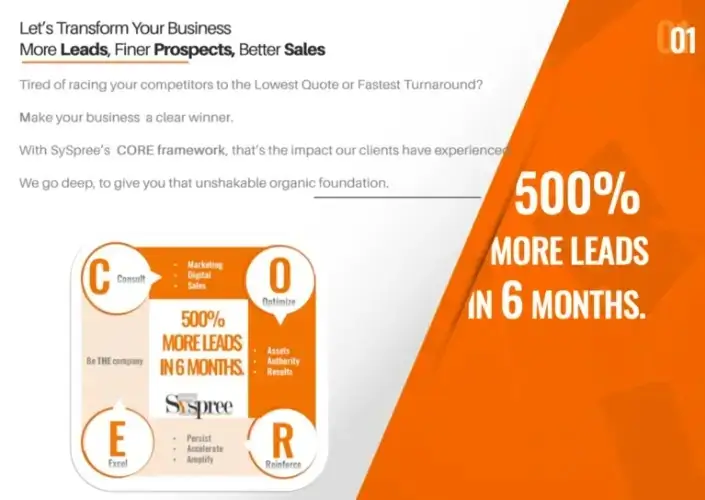
🚀 Want Results Like 500% More Leads in 4 Months?
Let’s talk about what these strategies can do for your business.
We’ll tailor a plan for your goals — no fluff, no pressure.
📧 Or just drop us a line at https://syspree.com/contact/
You may also like ( Author’s curated blogs for you) :
- The Future of IT in Corporate Services Beyond 2026: What Business Owners Need to Know
- In-house IT vs. Managed IT: Which Works Best for Corporate Firms?
- Unlocking Growth: IT Adoption in Corporate Services for Tomorrow’s Leaders
- Why Weak IT Systems Undermine Corporate Service Firms: A Deep Dive into Solutions
- Analyzing the Role of IT in Corporate Service Security: A Must for Thriving SMEs

