15 Min to Compare Corporate IT Solutions and Choose Inhouse vs Managed IT
Introduction: Choosing the Right IT Strategy for Corporate Growth
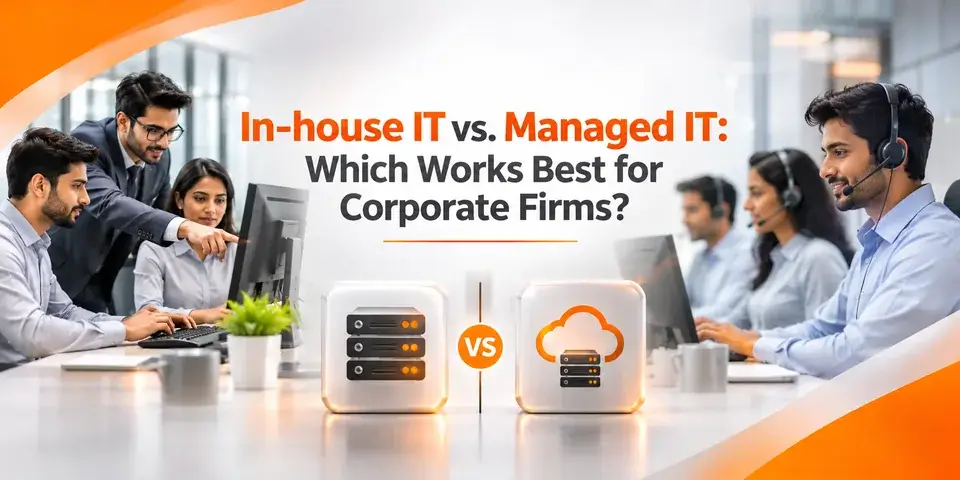
In today’s rapidly evolving digital landscape, corporate firms face an important decision: should they maintain an internal IT department or outsource technology management to an external service provider? Both approaches offer advantages, but selecting the right model can significantly influence operational efficiency, security, scalability, and long-term business growth.
Table of Contents
- Introduction: Choosing the Right IT Strategy for Corporate Growth
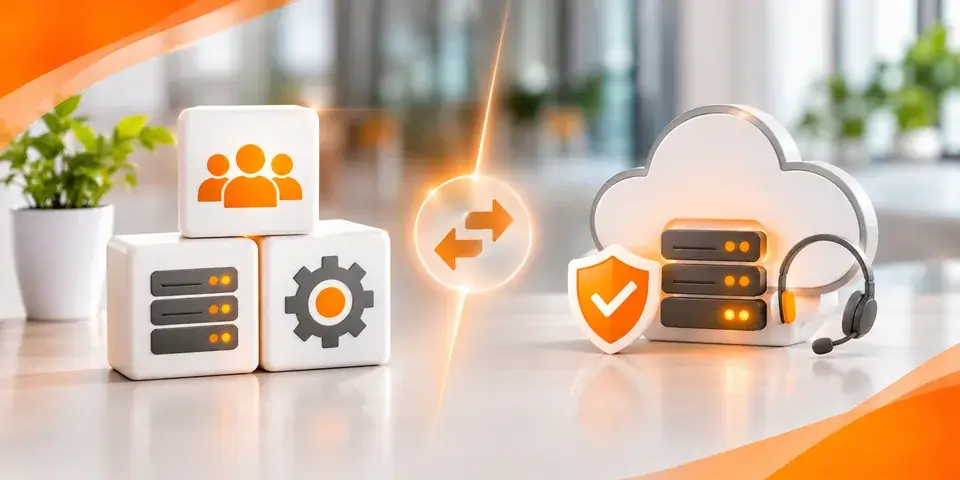
- Understanding In-House IT and Managed IT Services
- What Are Managed IT Services?
- 1. Evaluating the Cost Implications
- 2. Technology Advancement and Scalability
- 3. Expertise and Technical Specialization
- 4. Cybersecurity and Risk Management
- 5. System Reliability and Performance
- 6. Business Continuity and Disaster Recovery
- 7. Focus on Core Business Activities
- 8. Control, Communication, and Accountability
- 9. Considering a Hybrid IT Model
- Illustrative Scenario: TechFin Evaluates Its IT Strategy
- How to Choose the Right IT Model for Your Business
- Comparison: In-House IT vs. Managed IT
- How SySpree Supports Corporate IT Strategy
- Conclusion: Making the Right IT Decision
For small and medium-sized enterprises (SMEs), the Inhouse v/s Managed IT decision is particularly important because technology requirements often expand faster than internal resources.
While an in-house IT department provides direct control over technology operations, managed IT services can offer access to specialized expertise, flexible support, and predictable service arrangements.
Understanding Inhouse v/s Managed IT differences helps business leaders evaluate which approach aligns with their operational requirements, financial resources, and future expansion plans.
This article compares both models across cost, scalability, expertise, security, and business continuity to help corporate firms make an informed decision.
Understanding In-House IT and Managed IT Services
What Is In-House IT?
In-house IT refers to an internal team employed directly by an organization to manage its technology infrastructure, applications, networks, user support, and security requirements.
Companies choosing this model typically maintain greater direct oversight of technical operations and can develop IT capabilities closely aligned with their business processes.
When evaluating Inhouse v/s Managed IT, organizations should consider whether their technology needs justify maintaining a dedicated internal team.
Advantages of In-House IT
- Direct control over technology decisions.
- Immediate familiarity with internal business processes.
- Closer collaboration with employees.
- Greater oversight of sensitive systems.
- Technology priorities aligned with internal leadership.
Challenges of In-House IT
- Employee recruitment and retention costs.
- Ongoing training requirements.
- Limited specialist expertise in smaller teams.
- Difficulty providing continuous coverage.
- Additional expenses during rapid expansion.
What Are Managed IT Services?
Managed IT services involve assigning selected technology responsibilities to an external provider under an agreed service arrangement.
These responsibilities may include infrastructure management, technical support, network administration, cybersecurity, cloud operations, and system maintenance.
IT Outsourcing Services can provide organizations with access to external technical capabilities without requiring every specialist to be employed internally.
The Inhouse v/s Managed IT comparison becomes especially relevant when businesses need broader expertise but want to maintain flexibility in their operating costs.
Advantages of Managed IT
- Access to specialized technical expertise.
- Flexible service arrangements.
- Reduced internal recruitment requirements.
- Potentially predictable recurring expenses.
- Access to established support processes.
- Support for changing technology requirements.
Challenges of Managed IT
- Dependence on external service providers.
- Potential communication delays.
- Less direct control over some operational activities.
- Contractual limitations and service exclusions.
- Vendor transition and integration challenges.
1. Evaluating the Cost Implications
Cost is often one of the most influential factors when deciding between internal and externally managed technology operations.
The Inhouse v/s Managed IT cost comparison should include more than salaries or monthly service fees.
Cost Structure of In-House IT
Maintaining an internal IT team may involve expenses such as employee salaries, benefits, recruitment, certifications, software tools, infrastructure, and ongoing professional development.
Businesses may also need additional employees to provide coverage during holidays, emergencies, or periods of increased demand.
Cost Structure of Managed IT Services
Managed IT providers commonly offer recurring service agreements based on defined responsibilities, support levels, and technology requirements.
However, organizations should review contracts carefully because project work, emergency services, additional licenses, and specialized support may incur separate charges.
When analyzing Inhouse v/s Managed IT, businesses should calculate the total cost of ownership over several years rather than comparing only initial expenses.
Important Cost Considerations
- Employee salaries and benefits.
- Recruitment and training expenses.
- Software licensing.
- Infrastructure maintenance.
- Support availability.
- Vendor management.
- Unexpected technical expenses.
2. Technology Advancement and Scalability
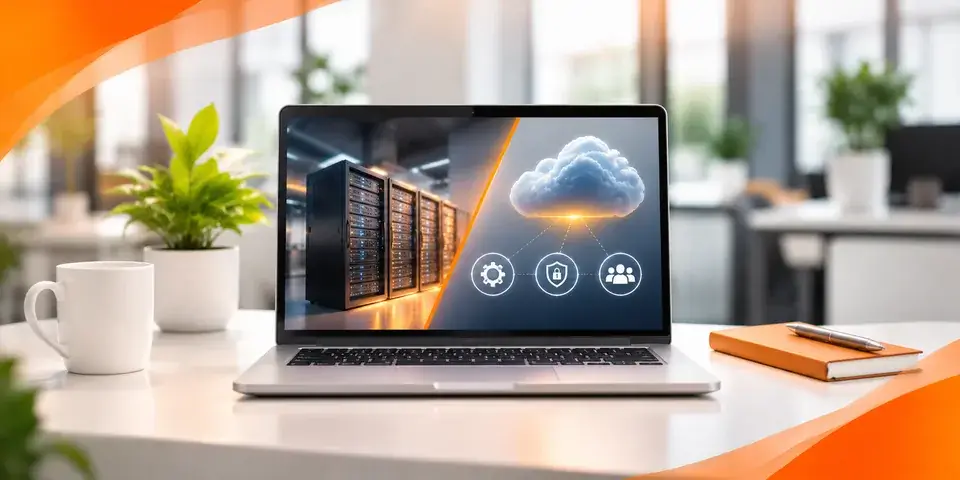
Corporate firms often experience changing technology requirements as they expand into new markets, introduce services, and recruit additional employees.
Scalability is therefore a major consideration in the Inhouse v/s Managed IT decision.
Scaling an Internal IT Department
An internal team can expand alongside the organization, but recruiting skilled employees and developing new capabilities may require considerable time and investment.
Smaller departments may also struggle to support sudden increases in workload.
Scaling With Managed IT Services
Managed service providers may offer access to additional technical resources and specialist support as business requirements evolve.
For growing SMEs, Inhouse v/s Managed IT scalability depends on how quickly each model can accommodate additional users, applications, locations, and operational demands.
3. Expertise and Technical Specialization
Modern IT environments require knowledge across multiple disciplines, including networking, cloud infrastructure, application management, cybersecurity, and technical support.
Maintaining deep expertise in every area can be challenging for smaller internal departments.
The Inhouse v/s Managed IT expertise comparison should examine the organization’s existing capabilities and identify specialist skills that may be difficult to maintain internally.
Benefits of Internal Expertise
- Strong familiarity with company operations.
- Direct collaboration with business departments.
- Knowledge of internal technology history.
- Greater continuity in long-term projects.
Benefits of External Expertise
- Access to professionals with varied technical backgrounds.
- Support for specialized infrastructure requirements.
- Additional resources for complex projects.
- Potential access to established technical procedures.
4. Cybersecurity and Risk Management
Corporate firms handle confidential customer information, employee records, financial documents, and proprietary business data.
Protecting these assets requires appropriate security policies, technical controls, monitoring, and incident response procedures.
Cybersecurity is a critical factor in the Inhouse v/s Managed IT comparison because both models must demonstrate the ability to manage evolving threats.
Security With an In-House IT Team
Internal teams may provide direct oversight of security policies, access permissions, and incident management.
However, smaller teams may face challenges maintaining specialist security knowledge and continuous monitoring capabilities.
Security With Managed IT Services
Managed providers may offer dedicated security expertise and access to established protective technologies.
Cybersecurity Solutions such as multi-factor authentication, endpoint protection, vulnerability management, and network monitoring can strengthen an organization’s security posture.
Regardless of the Inhouse v/s Managed IT model selected, businesses remain responsible for understanding their security obligations and ensuring appropriate controls are implemented.

5. System Reliability and Performance
Reliable technology is essential for maintaining employee productivity, customer satisfaction, and business continuity.
Unexpected downtime, slow applications, and recurring technical problems can disrupt corporate operations.
Performance Monitoring helps organizations observe system availability, application responsiveness, infrastructure capacity, and operational anomalies.
When comparing Inhouse v/s Managed IT, businesses should evaluate how each model detects technical problems, prioritizes incidents, and restores normal operations.
Important Reliability Metrics
- System availability.
- Application response time.
- Incident response time.
- Issue resolution time.
- Infrastructure capacity.
- Recurring technical problems.
6. Business Continuity and Disaster Recovery
Cyber incidents, hardware failures, accidental deletion, and unexpected outages can interrupt essential business activities.
Organizations need reliable recovery procedures regardless of whether their technology is managed internally or externally.
Backup Services help maintain recoverable copies of important business information.
The Inhouse v/s Managed IT decision should consider which arrangement can provide appropriate recovery planning, backup protection, and regular restoration testing.
Essential Business Continuity Measures
- Identify business-critical systems.
- Establish appropriate backup schedules.
- Protect backup information.
- Document recovery procedures.
- Test restoration capabilities.
- Assign clear incident responsibilities.
7. Focus on Core Business Activities
Corporate service firms need to dedicate sufficient resources to customer relationships, service delivery, business development, and strategic planning.
Managing technology internally can sometimes require substantial leadership attention, especially when the organization experiences frequent technical problems.
The Inhouse v/s Managed IT comparison should therefore examine how each approach affects management time and employee productivity.
Potential Benefits of External IT Management
- Reduced internal administrative responsibilities.
- Access to established support procedures.
- More time for business development.
- Additional technical resources during expansion.
- Support for routine maintenance activities.
However, outsourcing does not eliminate the need for internal oversight, vendor coordination, or strategic technology leadership.

8. Control, Communication, and Accountability
One of the strongest arguments for maintaining an internal IT department is direct control over daily technology operations.
Internal employees can collaborate closely with management and respond to organization-specific requirements.
Managed services introduce a different accountability structure, making contracts, communication procedures, and service expectations especially important.
Evaluating Inhouse v/s Managed IT control requires businesses to determine which decisions must remain internal and which responsibilities can be delegated effectively.
Questions to Ask a Managed IT Provider
- What services are included in the agreement?
- What response times are guaranteed?
- How are urgent incidents escalated?
- Who owns and controls business data?
- What security responsibilities belong to each party?
- How are service performance and costs reported?
- What happens when the agreement ends?
9. Considering a Hybrid IT Model
Businesses do not always need to choose exclusively between an internal department and a managed service provider.
A hybrid approach combines internal technology leadership with external support for selected operational or specialist responsibilities.
For some organizations, the Inhouse v/s Managed IT decision becomes easier when they recognize that both models can complement each other.
Example of a Hybrid IT Structure
- Internal team: Technology strategy and business alignment.
- Managed provider: Routine infrastructure maintenance.
- Internal team: Application priorities and employee requirements.
- Managed provider: Specialist security and monitoring support.
- Shared responsibility: Incident response and recovery planning.
Illustrative Scenario: TechFin Evaluates Its IT Strategy
Consider TechFin, a hypothetical growing financial technology company that initially relies on a small internal IT department.
As the company expands, its employees face increasing demands involving infrastructure management, technical support, security, and application maintenance.
Management begins evaluating Inhouse v/s Managed IT options to determine how the company can access additional expertise without losing control over critical technology decisions.
The Proposed Solution
TechFin retains internal responsibility for technology strategy, sensitive business applications, and vendor oversight while assigning selected infrastructure and support activities to a managed provider.
This hybrid structure could allow internal employees to focus on business-specific requirements while external specialists handle agreed operational responsibilities.
Key Lessons
- Identify which IT functions are strategically important.
- Assess internal expertise and resource limitations.
- Define service expectations clearly.
- Maintain appropriate security oversight.
- Measure performance after implementation.
How to Choose the Right IT Model for Your Business
Every corporate firm has different technology requirements, financial resources, growth plans, and risk considerations.
Making the right Inhouse v/s Managed IT choice requires evaluating these factors together rather than selecting a model based solely on cost.
Questions Business Leaders Should Ask
- What is our current IT budget? Include staffing, infrastructure, licensing, maintenance, and support expenses.
- How much direct control do we require? Identify critical systems and sensitive responsibilities.
- Which specialist skills are missing? Review current expertise and future technology requirements.
- How quickly are we growing? Consider additional users, locations, applications, and workloads.
- What security requirements must we meet? Evaluate technical and regulatory obligations.
- What support availability do we need? Determine acceptable response and recovery times.
Comparison: In-House IT vs. Managed IT
| Factor | In-House IT | Managed IT |
|---|---|---|
| Control | Greater direct operational control | Shared through contractual arrangements |
| Cost | Staffing and infrastructure expenses | Typically recurring service fees |
| Expertise | Depends on internal team capabilities | May provide access to broader specialists |
| Scalability | May require additional recruitment | May offer flexible service capacity |
| Security | Managed through internal resources | Managed according to agreed responsibilities |
| Support | Depends on staffing and coverage | Depends on contracted service levels |
| Business Knowledge | Typically strong internal familiarity | Requires effective provider onboarding |
How SySpree Supports Corporate IT Strategy
SySpree helps businesses evaluate their technology requirements, identify operational challenges, and develop digital strategies aligned with organizational objectives.
Our approach to Inhouse v/s Managed IT planning begins with understanding the company’s existing infrastructure, internal capabilities, growth expectations, and security requirements.
Important Areas for IT Strategy Development
- Technology environment assessment.
- Infrastructure planning.
- IT Outsourcing Services evaluation.
- Cybersecurity Solutions planning.
- Performance Monitoring requirements.
- Backup Services strategy.
- Technology cost evaluation.
- Business continuity planning.
The objective is to identify a technology management structure that supports reliable operations, appropriate security, and sustainable growth.

Conclusion: Making the Right IT Decision
Choosing between an internal IT department and managed services is a strategic business decision that can influence costs, security, scalability, and operational efficiency.
The Inhouse v/s Managed IT comparison demonstrates that neither model is universally superior. Internal teams offer direct oversight and organizational familiarity, while managed providers may offer specialist expertise and flexible support arrangements.
Businesses should evaluate their operational requirements, available resources, technology priorities, and long-term growth objectives before making a decision.
Ultimately, the best Inhouse v/s Managed IT strategy is the one that provides reliable technology support while allowing the organization to concentrate on delivering value to customers.
Ready to evaluate your IT strategy? Contact SySpree today to discuss your business technology requirements and explore solutions aligned with your operational and growth objectives.
🚀 Want Results Like 500% More Leads in 4 Months?
Let’s talk about what these strategies can do for your business.
We’ll tailor a plan for your goals — no fluff, no pressure.
📧 Or just drop us a line at https://syspree.com/contact/
You may also like ( Author’s curated blogs for you) :
- Unlocking Growth: IT Adoption in Corporate Services for Tomorrow’s Leaders
- Why Weak IT Systems Undermine Corporate Service Firms: A Deep Dive into Solutions
- Analyzing the Role of IT in Corporate Service Security: A Must for Thriving SMEs
- How Corporate Firms are Transforming Success Through IT: Real Stories and Proven Strategies
- Building a Robust IT Infrastructure for Corporate Services: A Roadmap to Enterprise Success