
15 Min to Unlock Business Growth Strategies with Social Media Corporate
Introduction
In today’s digitally driven business environment, social media has become a powerful channel for visibility, trust, lead generation, and relationship building. For companies operating in competitive markets, Social Media Corporate strategies can help transform online activity into measurable business growth.
Table of Contents
- Introduction
- Why Social Media Matters for Corporate Services
- 1. Strengthen Brand Visibility and Recognition
- 2. Build Client Trust Through Useful Content
- 3. Improve Real-Time Client Engagement
- 4. Generate and Qualify Business Leads
- 5. Choose Platforms Based on Business Goals
- 6. Build Valuable Networks and Partnerships
- 7. Use Social Listening to Understand the Market
- 8. Connect Social Media with the Website
- 9. Use Technology to Improve Lead Management
- 10. Make Decisions with Reliable Data
- Common Social Media Mistakes to Avoid
- How SySpree Builds Corporate Social Media Strategies
- Practical Steps to Improve Your Social Media Strategy
- Conclusion
Many small and medium-sized enterprises generating more than USD 20,000 per month understand the importance of social platforms but struggle to convert activity into meaningful outcomes. A focused Social Media Corporate approach gives businesses a clearer framework for reaching decision-makers, building authority, and nurturing prospects.

Why Social Media Matters for Corporate Services
Corporate service firms sell expertise, trust, and long-term value. Unlike impulse-driven consumer purchases, corporate buying decisions often involve research, comparison, and multiple stakeholders. This makes Social Media Corporate engagement especially valuable throughout the customer journey.
Social platforms allow companies to communicate ideas, demonstrate credibility, and remain visible between formal sales conversations.
1. Strengthen Brand Visibility and Recognition
A consistent presence helps potential clients understand what a company does, who it serves, and why its services matter. A strong Social Media Corporate identity should use recognizable visuals, clear messaging, and a consistent brand voice across relevant platforms.
Create a Cohesive Brand Experience
Every post should support the company’s wider positioning. Visual style, language, topics, and calls to action should feel connected rather than fragmented.
- Use consistent brand colours and typography.
- Develop repeatable content themes.
- Align executive profiles with company messaging.
- Maintain clear descriptions across social profiles.
- Link social content to relevant website pages.
When managed consistently, Social Media Corporate visibility helps smaller firms compete more effectively with larger and better-known businesses.
2. Build Client Trust Through Useful Content
Corporate buyers want evidence of expertise before they begin a conversation. Educational posts, industry commentary, case studies, and practical insights can demonstrate knowledge without relying on aggressive promotion.
Content Marketing supports Social Media Corporate growth by turning subject-matter expertise into useful resources for potential clients.
Content Formats That Build Authority
- Industry observations and trend analysis
- Short educational videos
- Executive perspectives
- Client success stories
- Research summaries
- Frequently asked questions
- Behind-the-scenes team content
A thoughtful Social Media Corporate strategy should educate first and promote second. This approach makes the brand more credible and encourages prospects to return for further insight.

3. Improve Real-Time Client Engagement
Social platforms give companies the opportunity to answer questions, respond to feedback, and participate in relevant conversations. These interactions can humanize the brand and improve confidence.
Effective Social Media Corporate engagement requires timely responses and a clear process for handling comments, messages, and enquiries.
Engagement Practices to Follow
- Respond to genuine questions promptly.
- Thank users who share or recommend content.
- Participate in industry discussions.
- Use polls and questions to encourage interaction.
- Escalate sensitive enquiries to the appropriate team.
Open communication helps Social Media Corporate activity become a relationship-building tool rather than a one-way publishing channel.
4. Generate and Qualify Business Leads
Social media can support lead generation when campaigns are designed around a clear audience, offer, and conversion path. Posting regularly without a strategy rarely produces consistent opportunities.
A performance-focused Social Media Corporate campaign may combine educational content, targeted advertisements, downloadable resources, webinars, and consultation offers.
Improve Lead Generation Campaigns
- Target audiences by role, industry, company size, and interest.
- Create landing pages for specific campaign offers.
- Use clear and relevant calls to action.
- Retarget users who engage with key content.
- Track qualified leads rather than clicks alone.
Behavioral Targeting can improve Social Media Corporate performance by adapting messages according to user interests, activity, and demonstrated intent.
5. Choose Platforms Based on Business Goals
Not every platform will deliver equal value for every corporate service firm. Platform selection should reflect where decision-makers research, communicate, and evaluate providers.
LinkedIn is often a priority for B2B organizations, while YouTube can support educational and technical content. Facebook and Instagram may be useful for employer branding, community engagement, and visual storytelling.
A focused Social Media Corporate plan concentrates resources on the channels most likely to influence the target audience.

6. Build Valuable Networks and Partnerships
Social media can introduce businesses to prospective partners, industry specialists, suppliers, and referral sources. These relationships may create joint ventures, co-marketing opportunities, and new service capabilities.
Social Media Corporate networking works best when companies contribute to discussions instead of approaching every interaction as a sales opportunity.
Networking Activities to Consider
- Join relevant professional groups.
- Engage with industry leaders.
- Participate in virtual events.
- Share partner insights and achievements.
- Collaborate on webinars and research.
7. Use Social Listening to Understand the Market
Social listening reveals what customers, competitors, and industry professionals are discussing. It can highlight emerging problems, common objections, sentiment changes, and new content opportunities.
This insight helps businesses adjust Social Media Corporate messaging according to real market conversations.
What Social Listening Can Reveal
- Frequently discussed customer challenges
- Competitor strengths and weaknesses
- Popular industry topics
- Changes in customer expectations
- Potential reputation risks

8. Connect Social Media with the Website
Social engagement should guide users toward useful next steps, including service pages, case studies, contact forms, and downloadable resources.
Responsive UX Solutions ensure that visitors arriving from mobile social platforms can navigate the website, read content, and complete forms easily.
If the website experience is confusing or slow, even strong Social Media Corporate campaigns may fail to produce conversions.
9. Use Technology to Improve Lead Management
Social leads can lose value when enquiries are not captured, assigned, and followed up quickly. Marketing systems should connect social activity with customer relationship management and sales processes.
Third-Party Integrations can link social platforms, CRM systems, analytics tools, and email solutions. This gives teams a clearer view of how Social Media Corporate engagement influences the sales pipeline.
10. Make Decisions with Reliable Data
Social platforms provide large volumes of data, but not every metric deserves equal attention. Likes and followers can provide context, yet they do not always reflect business impact.
Custom Reporting can organize the metrics that matter and show whether Social Media Corporate activity is contributing to awareness, engagement, leads, and revenue.
Important Social Media Metrics
- Qualified leads by platform
- Engagement rate
- Website visits from social channels
- Landing-page conversion rate
- Cost per lead
- Audience growth
- Pipeline value influenced
Common Social Media Mistakes to Avoid
Posting Without a Clear Goal
Every campaign should support awareness, engagement, lead generation, retention, or another measurable objective.
Focusing Only on Promotion
Constant sales messaging can reduce engagement. A balanced Social Media Corporate plan should combine educational, conversational, and promotional content.
Ignoring Comments and Messages
Unanswered enquiries can create a negative impression and lead to lost opportunities.
Using the Same Content Everywhere
Content should be adapted to the format, audience, and behaviour of each platform.
Measuring Vanity Metrics Alone
Followers and impressions should be reviewed alongside leads, conversions, and revenue contribution.
How SySpree Builds Corporate Social Media Strategies
SySpree combines strategy, creative content, audience targeting, analytics, and conversion planning to help corporate service firms build stronger social channels.
Our Social Media Corporate process begins with business goals, audience research, competitive analysis, and platform selection. We then create a content and campaign roadmap designed to support measurable outcomes.
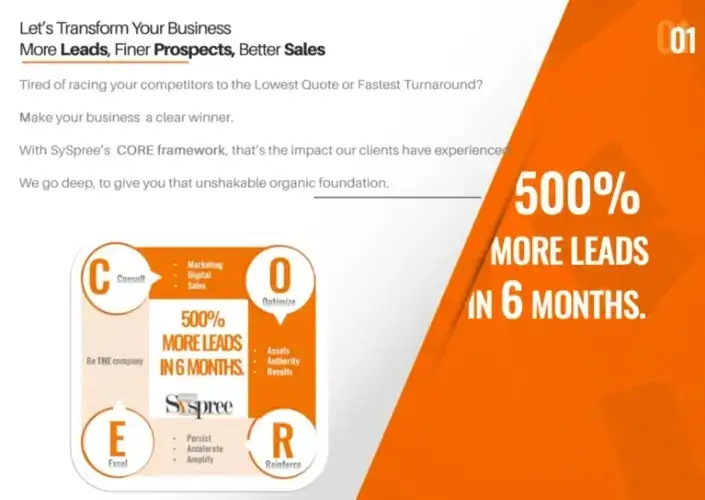
SySpree’s Core Approach
- Customized planning: Strategies aligned with the audience, services, and growth priorities.
- Content creation: Useful and brand-consistent content designed to build authority.
- Campaign management: Targeted paid and organic activity across relevant platforms.
- Analytics: Clear reporting that connects activity with business outcomes.
- Continuous optimization: Ongoing improvements based on campaign data.
This integrated approach helps transform Social Media Corporate efforts from irregular posting into a structured growth system.
Practical Steps to Improve Your Social Media Strategy
- Define the business objective for each platform.
- Identify the decision-makers you need to reach.
- Create content themes around their challenges.
- Develop a realistic publishing schedule.
- Use targeted campaigns for high-value offers.
- Connect social activity with website conversions.
- Review qualified leads and revenue contribution.
- Refine the strategy based on performance.
Following these steps can make Social Media Corporate marketing more focused, measurable, and commercially valuable.
Conclusion
Social media is no longer an optional communication tool for corporate service providers. It influences visibility, credibility, client engagement, partnerships, and lead generation.
A successful strategy combines relevant content, consistent interaction, careful targeting, connected technology, and reliable measurement.
With the right plan, businesses can turn social platforms into meaningful channels for long-term growth.
Ready to strengthen your social media presence? Contact SySpree to create a strategy designed around your audience, services, and business goals.
🚀 Want Results Like 500% More Leads in 4 Months?
Let’s talk about what these strategies can do for your business.
We’ll tailor a plan for your goals — no fluff, no pressure.
📧 Or just drop us a line at https://syspree.com/contact/
You may also like ( Author’s curated blogs for you) :
- Why Skipping SEO Limits Corporate Service Growth: Unlocking the Untapped Potential
- The Ultimate Guide to Analyzing ROI of Digital Marketing in Corporate Services: Unlocking Success
- Unveiling Success: How Corporate Firms Scaled with Digital Marketing Revolution
- How to Create a Digital Marketing Plan for Corporate Services: A Comprehensive Guide for Success
- 10 Proven Web Design Tips to Strengthen Corporate Service Brands




Very well presented. Every quote was awesome and thanks for sharing the content. Keep sharing and keep motivating others.
I am truly thankful to the owner of this web site who has shared this fantastic piece of writing at at this place.
This was beautiful Admin. Thank you for your reflections.
I appreciate you sharing this blog post. Thanks Again. Cool.