15 Min to Discover High-Impact Strategies Using Outsourcing Models SaaS
Introduction
In the fast-moving SaaS industry, growth depends on more than just a strong product. It also depends on how efficiently your business operates, how quickly you can adapt, and how well you allocate internal resources. For many growing companies, that is where Outsourcing Models SaaS businesses use become incredibly valuable.
Table of Contents
- Introduction
- Why Outsourcing Matters for SaaS Companies
- 1. Project-Based Outsourcing
- 2. Dedicated Team Outsourcing
- 3. Staff Augmentation
- 4. Offshore Outsourcing
- 5. Nearshore Outsourcing
- 6. Managed Services Outsourcing
- 7. Cloud-Based Outsourcing
- 8. Specialized Outsourcing
- 9. Functional Outsourcing
- How to Choose the Right Model
- The SySpree Advantage for SaaS Companies
- Conclusion
As customer expectations rise and competition intensifies, SaaS firms are under pressure to innovate faster while keeping costs under control. The right Outsourcing Models SaaS companies choose can help reduce bottlenecks, improve delivery speed, and create room for stronger strategic focus. Instead of stretching internal teams too thin, businesses can use outsourcing to build smarter and scale faster.
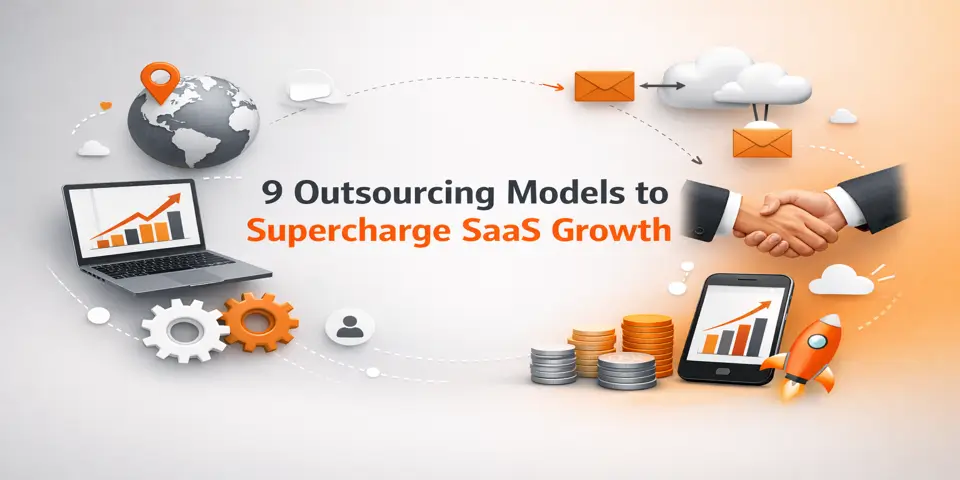
This is why understanding the most effective Outsourcing Models SaaS firms rely on is no longer optional. It is a practical growth decision. From product development and support to infrastructure and specialist execution, the right outsourcing structure can transform how your company performs. Below are nine powerful Outsourcing Models SaaS companies can use to supercharge growth and improve operational efficiency.

Why Outsourcing Matters for SaaS Companies
SaaS businesses operate in a demanding environment where speed, quality, customer satisfaction, and innovation must all work together. Without the right support systems, internal teams can become overwhelmed by non-core work, delayed launches, or rising service expectations. That is exactly why Outsourcing Models SaaS leaders adopt are designed to create flexibility and reduce operational strain.
When outsourcing is used strategically, companies can focus more energy on core product vision, customer success, and expansion. The most effective Outsourcing Models SaaS organizations adopt are not about giving work away blindly. They are about strengthening execution with the right external expertise.
1. Project-Based Outsourcing
Project-based outsourcing is one of the most practical Outsourcing Models SaaS companies can use when they need specialists for a clearly defined initiative. This model works well for one-time or short-term needs such as building a feature, redesigning a dashboard, or launching a new platform module.
For example, a SaaS brand may outsource a one-time Web Application Development project to speed up delivery without hiring a full internal team. This approach is useful when the scope, deadlines, and outputs are clearly documented. Among the many Outsourcing Models SaaS companies consider, this one offers strong control over budget and outcomes.
2. Dedicated Team Outsourcing
A dedicated team model gives your business a remote team that works like an extension of your internal staff. This is one of the most effective Outsourcing Models SaaS firms can choose for long-term collaboration, especially when ongoing support or continuous development is required.
This model works well for businesses that need sustained help in Application and Software Development, product maintenance, or structured delivery cycles. The advantage is deeper alignment, stronger process continuity, and easier integration with your existing workflow. For many firms, this is one of the most scalable Outsourcing Models SaaS growth plans depend on.
3. Staff Augmentation
Staff augmentation allows companies to temporarily add external professionals to their internal teams. This is one of the most flexible Outsourcing Models SaaS companies can adopt when workloads rise unexpectedly or when niche talent is needed fast.
Rather than committing to long-term hiring, businesses can bring in skilled developers, analysts, designers, or engineers for a fixed period. This is especially useful when internal deadlines are tight or new expertise is required for expansion. Among modern Outsourcing Models SaaS brands use, staff augmentation is ideal for short-term capacity without permanent overhead.

4. Offshore Outsourcing
Offshore outsourcing involves working with external teams in distant countries, often to access cost advantages and round-the-clock productivity. This remains one of the most widely used Outsourcing Models SaaS firms explore when they want to reduce operating costs while maintaining service continuity.
For example, offshore teams can support technical operations, development cycles, and even Customer Support Outsourcing across time zones. When managed properly, this model can improve responsiveness and create substantial operational leverage. Still, among all Outsourcing Models SaaS businesses use, offshore partnerships require strong communication systems and clear performance standards.
5. Nearshore Outsourcing
Nearshore outsourcing connects your company with service providers in nearby countries or similar time zones. This is one of the most balanced Outsourcing Models SaaS companies can choose when they want the benefits of outsourcing without the communication barriers often seen in far-off markets.
Because collaboration is easier in real time, nearshoring often supports faster meetings, quicker revisions, and better cultural alignment. It is especially useful for projects involving UI/UX Design, testing, and collaborative product work. For teams that value smoother communication, this is one of the most practical Outsourcing Models SaaS businesses can adopt.
6. Managed Services Outsourcing
Managed services outsourcing is designed for ongoing operational support. In this model, a provider takes responsibility for maintaining a business function or technical environment. It is one of the most strategic Outsourcing Models SaaS companies rely on when they want stable performance without daily internal management.
This is often used for infrastructure, monitoring, security, and support systems. A SaaS company may outsource server oversight, maintenance workflows, or technical administration while its internal team focuses on innovation. In many cases, Outsourcing Models SaaS firms use most successfully include managed services because they support reliability at scale.

7. Cloud-Based Outsourcing
Cloud-based delivery has transformed how external services are accessed and managed. This makes cloud-based outsourcing one of the most modern Outsourcing Models SaaS businesses can use for flexibility and scalability.
Whether the need involves Cloud Based Applications, shared infrastructure, remote collaboration tools, or data workflows, this model enables businesses to access services on demand. It often reduces capital expenditure and improves access to scalable digital resources. As technology evolves, cloud-driven Outsourcing Models SaaS firms use are becoming even more important for efficient growth.
8. Specialized Outsourcing
Specialized outsourcing focuses on high-skill services that require expert knowledge. This is one of the most valuable Outsourcing Models SaaS businesses can adopt when they need advanced capability without building every function internally.
Common examples include Search Engine Optimization (SEO), analytics, automation, technical writing, design systems, and Cybersecurity Solutions. A SaaS business might outsource a product launch strategy, an SEO growth campaign, or a security audit to a specialist team. This is one of the smartest Outsourcing Models SaaS firms can use when expertise directly affects performance.
9. Functional Outsourcing
Functional outsourcing means assigning an entire business function to an external partner. This is one of the most efficient Outsourcing Models SaaS companies use when they want to streamline operations and focus on their core offering.
Functions such as HR, finance support, legal administration, Digital Marketing Outsourcing, or Business Process Outsourcing can often be handled externally with strong results. This model helps internal teams stay focused on product growth and customer value. Of all the Outsourcing Models SaaS organizations use, functional outsourcing often creates the clearest separation between core and non-core responsibilities.

How to Choose the Right Model
Not every model will suit every SaaS company. The best choice depends on your stage of growth, internal capabilities, and business goals. The most effective Outsourcing Models SaaS companies use are selected based on practical needs, not trends alone.
If you need specialist help for a short-term initiative, project-based or specialized outsourcing may be the best fit. If your business needs long-term support, dedicated teams or managed services may offer stronger value. The key is to evaluate which Outsourcing Models SaaS operations need most in order to remove friction and support scale.
The SySpree Advantage for SaaS Companies
At SySpree, we understand that scaling a SaaS business requires more than effort. It requires the right operational structure, technical support, and growth systems. That is why we help businesses identify and implement the most effective Outsourcing Models SaaS growth strategies demand.
From technical services and development support to digital execution and customer-focused delivery, our solutions are designed to align with your business goals. Whether you need support in development, operations, or Digital Marketing, we help you use outsourcing in a way that strengthens performance rather than adding complexity.

Conclusion
The right outsourcing strategy can create a major competitive advantage for a SaaS business. It can help you reduce costs, move faster, improve quality, and stay focused on the work that drives long-term value. That is why understanding the most effective Outsourcing Models SaaS firms use is so important in today’s market.
From project-based support to functional partnerships, each model offers unique strengths. The real opportunity lies in selecting the Outsourcing Models SaaS company leaders can use to solve the right problems at the right stage of growth. With a smart approach, outsourcing becomes more than a convenience. It becomes a growth engine.
Call to Action
Are you ready to harness the power of outsourcing to scale your SaaS company? Contact us today for a consultation, and let’s explore how SySpree can help you achieve your business goals.
🚀 Want Results Like 500% More Leads in 4 Months?
Let’s talk about what these strategies can do for your business.
We’ll tailor a plan for your goals — no fluff, no pressure.
📧 Or just drop us a line at https://syspree.com/contact/
You may also like ( Author’s curated blogs for you) :
- How SaaS Firms are Skyrocketing Growth with Smart Outsourcing: Success Stories and Strategies
- Outsourcing Support vs. Outsourcing Marketing: Which Benefits SaaS Firms More?
- Discover Powerful Outsourcing Trends Transforming the SaaS Market
- Why Outsourcing Core Development Can Backfire for SaaS: Safeguard Your Growth Strategy in 2026
- Unveiling the True Cost and ROI of Outsourcing in SaaS: A Strategic Guide for Business Growth
I very delighted to find this internet site on bing, just what I was searching for as well saved to fav
I truly appreciate your technique of writing a blog. I added it to my bookmark site list and will
Really appreciate how you make complex topics feel simple 🚀 💕 and accessible to all readers
Great information shared.. really enjoyed reading this post thank you author for sharing this post .. appreciated
I just like the helpful information you provide in your articles
This is really interesting, You’re a very skilled blogger. I’ve joined your feed and look forward to seeking more of your magnificent post. Also, I’ve shared your site in my social networks!
I just like the helpful information you provide in your articles
very informative articles or reviews at this time.
I am truly thankful to the owner of this web site who has shared this fantastic piece of writing at at this place.
I truly appreciate your technique of writing a blog. I added it to my bookmark site list and will
Very well presented. Every quote was awesome and thanks for sharing the content. Keep sharing and keep motivating others.
Very well presented. Every quote was awesome and thanks for sharing the content. Keep sharing and keep motivating others.
There is definately a lot to find out about this subject. I like all the points you made
I just like the helpful information you provide in your articles
Pretty! This has been a really wonderful post. Many thanks for providing these details.
I am truly thankful to the owner of this web site who has shared this fantastic piece of writing at at this place.
I very delighted to find this internet site on bing, just what I was searching for as well saved to fav
The real time word counter updates instantly which helps when trimming content.