
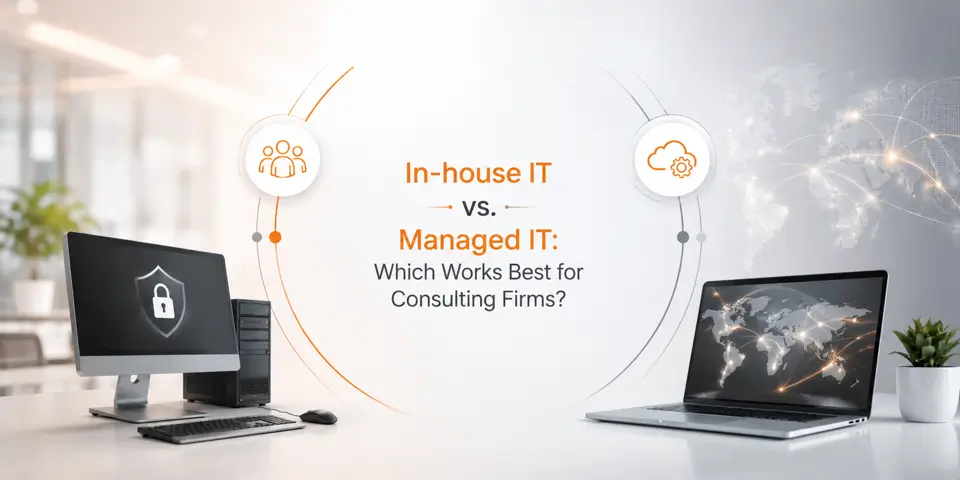
15 Min to Compare Smart Technology Solutions with Inhouse vs Managed IT
Introduction
Consulting firms depend on reliable technology to serve clients, protect data, and scale efficiently. That is why the Inhouse vs Managed IT decision is so important for firms aiming to reduce disruptions and improve performance.
Table of Contents
The right Inhouse vs Managed IT choice can affect costs, security, flexibility, productivity, and long-term growth.
This blog compares Inhouse vs Managed IT so consulting firms can decide which model best fits their business goals.
Understanding In-house IT
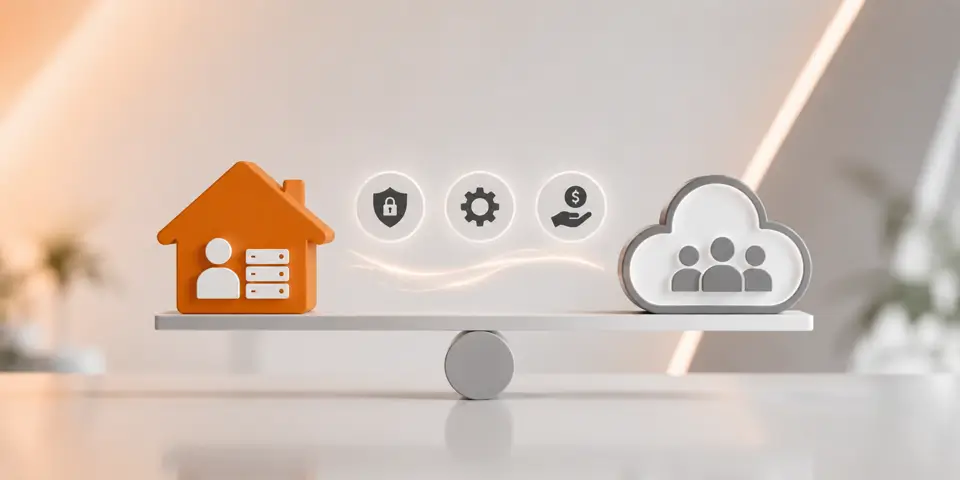
In the Inhouse vs Managed IT comparison, in-house IT means your consulting firm employs its own internal technology team.
This team manages daily IT support, systems, security, infrastructure, and technology planning directly within the organization.
Pros of In-house IT
One advantage of Inhouse vs Managed IT is control. Internal IT teams understand company culture, internal workflows, and specific business needs.
With direct access to systems and teams, in-house IT can provide customized support and faster internal alignment.
Cons of In-house IT
The challenge in the Inhouse vs Managed IT debate is cost. Hiring, salaries, benefits, training, tools, and infrastructure can become expensive.
Internal teams may also struggle with specialized areas such as Cybersecurity Solutions, cloud management, and advanced automation if resources are limited.

Understanding Managed IT Services
Managed IT services involve outsourcing technology management to an external provider. In the Inhouse vs Managed IT comparison, this model gives firms access to broader expertise without building a large internal team.
Managed providers support infrastructure, monitoring, security, backups, helpdesk needs, and strategic IT planning.
Pros of Managed IT
Managed IT can be cost-effective and scalable. In the Inhouse vs Managed IT choice, managed services often help firms reduce fixed costs while gaining access to expert support.
With strong Information Technology guidance, managed IT can improve uptime, support growth, and strengthen technical reliability.
Cons of Managed IT
The main concern in Inhouse vs Managed IT is reduced direct control. Some firms may feel dependent on an external provider for critical systems.
Clear communication, service-level agreements, and transparent reporting are essential to make managed IT successful.

Which Option Is Better for Consulting Firms?
The best Inhouse vs Managed IT choice depends on your firm’s size, budget, growth plans, security needs, and internal capabilities.
Firms with complex internal systems may prefer in-house control, while growing firms that need flexible support may benefit from managed IT.
Key Factors to Evaluate
Before deciding on Inhouse vs Managed IT, consulting firms should assess IT disruptions, security gaps, scalability needs, and long-term costs.
They should also review whether they need support with Website Security, Performance Monitoring, cloud migration, and Custom Reporting.
The Role of Automation and Analytics
Modern IT models should support automation and smarter decision-making. In the Inhouse vs Managed IT decision, firms should consider which option can best support future technology growth.
With AI-Powered Automation, Predictive Analytics, and Data Science and Analytics, firms can improve operations and reduce manual workloads.

When a Hybrid Model Works Best
For many consulting firms, the strongest answer to Inhouse vs Managed IT is a hybrid model.
An internal team can manage strategic priorities, while a managed provider handles specialized support, cybersecurity, monitoring, and infrastructure management.
How SySpree Helps Consulting Firms
At SySpree, we help firms make the right Inhouse vs Managed IT decision based on operational needs, security goals, and growth plans.
Our services include managed IT support, Application and Software Development, cybersecurity, automation, performance tracking, and scalable technology solutions.
Conclusion
The Inhouse vs Managed IT decision can shape how efficiently your consulting firm grows, serves clients, and protects sensitive information.
In-house IT offers control and internal alignment, while managed IT offers scalability, broader expertise, and cost flexibility.
By evaluating your goals carefully, your firm can choose an Inhouse vs Managed IT strategy that supports productivity, security, and sustainable growth.
Call to Action :
Ready to redefine your IT strategy? Contact SySpree today to discover how our managed IT solutions can transform your consulting firm’s operations and drive sustainable growth.
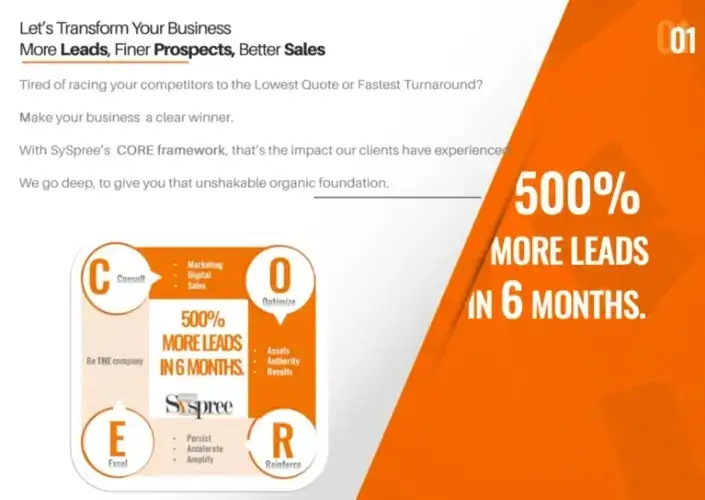
🚀 Want Results Like 500% More Leads in 4 Months?
Let’s talk about what these strategies can do for your business.
We’ll tailor a plan for your goals — no fluff, no pressure.
📧 Or just drop us a line at https://syspree.com/contact/
You may also like ( Author’s curated blogs for you) :
- Unveiling the Future: Observations on IT Adoption Trends in Consulting
- How Weak IT Frameworks Can Jeopardize Your Consulting Clients and What to Do About It
- In-depth Analysis of IT’s Role in Consulting Data Security
- Success Stories: How Consulting Firms Thrive with Robust IT Solutions
- How to Build IT Systems That Strengthen Consulting Firms: A Comprehensive Guide
You’re so awesome! I don’t believe I have read a single thing like that before. So great to find someone with some original thoughts on this topic. Really.. thank you for starting this up. This website is something that is needed on the internet, someone with a little originality!
I just like the helpful information you provide in your articles
I like the efforts you have put in this, regards for all the great content.
I just like the helpful information you provide in your articles
Nice post. I learn something totally new and challenging on websites
There is definately a lot to find out about this subject. I like all the points you made
Good post! We will be linking to this particularly great post on our site. Keep up the great writing
I appreciate you sharing this blog post. Thanks Again. Cool.
I appreciate you sharing this blog post. Thanks Again. Cool.
çok yararlı bir paylaşım olmuş teşekkür ederim çok işime yarıcak.
Pretty! This has been a really wonderful post. Many thanks for providing these details.
There is definately a lot to find out about this subject. I like all the points you made
I appreciate you sharing this blog post. Thanks Again. Cool.
Very well presented. Every quote was awesome and thanks for sharing the content. Keep sharing and keep motivating others.
I truly appreciate your technique of writing a blog. I added it to my bookmark site list and will
I like the efforts you have put in this, regards for all the great content.
I like the efforts you have put in this, regards for all the great content.
Thanks for breaking down complex alloy information so simply.
This article helped me understand alloy performance better.
Informative and well structured article, keep it up.
I like the efforts you have put in this, regards for all the great content.
Pretty! This has been a really wonderful post. Many thanks for providing these details.
This article provided great clarity on specialty alloys and their performance.
Thanks for posting such valuable technical knowledge.
Very useful content for professionals in manufacturing industries.
I just like the helpful information you provide in your articles
This was beautiful Admin. Thank you for your reflections.
This was beautiful Admin. Thank you for your reflections.
I really liked how you explained the applications in detail.
Great post, looking forward to more content like this.
This article explains corrosion challenges well. Super duplex steel suppliers play a huge role in offshore durability.
Trusted stainless steel exporters simplify global supply chains.
Appreciate the detailed explanation provided here.
This was beautiful Admin. Thank you for your reflections.
I truly appreciate your technique of writing a blog. I added it to my bookmark site list and will
I am truly thankful to the owner of this web site who has shared this fantastic piece of writing at at this place.
Good post! We will be linking to this particularly great post on our site. Keep up the great writing
Love how you make difficult concepts seem so simple
I appreciate you sharing this blog post. Thanks Again. Cool.
I very delighted to find this internet site on bing, just what I was searching for as well saved to fav
Pretty! This has been a really wonderful post. Many thanks for providing these details.
very informative articles or reviews at this time.
Your talent for storytelling never ceases to amaze me every time
Nice post. I learn something totally new and challenging on websites
I am truly thankful to the owner of this web site who has shared this fantastic piece of writing at at this place.
I do not even understand how I ended up here, but I assumed this publish used to be great
Pretty! This has been a really wonderful post. Many thanks for providing these details.
This is so helpful
Pretty! This has been a really wonderful post. Many thanks for providing these details.
Pretty! This has been a really wonderful post. Many thanks for providing these details.
This is my first time pay a quick visit at here and i am really happy to read everthing at one place
I like the efforts you have put in this, regards for all the great content.
This was beautiful Admin. Thank you for your reflections.
very informative articles or reviews at this time.
I truly appreciate your technique of writing a blog. I added it to my bookmark site list and will
This was beautiful Admin. Thank you for your reflections.
I am truly thankful to the owner of this web site who has shared this fantastic piece of writing at at this place.
I like the efforts you have put in this, regards for all the great content.
very informative articles or reviews at this time.
Good post! We will be linking to this particularly great post on our site. Keep up the great writing
Thanks for sharing this useful information with us.
Excellent post. I’ve learned a lot of new things from this.
Short, sweet, and straight to the point. Love it!
Very neat and well-structured article. Thanks for your effort.
This post deserves way more attention and comments.
This is exactly what I was searching for. Keep up the good work.
Short, sweet, and straight to the point. Love it!
This is exactly what I was searching for. Keep up the good work.
I’ve been looking for this kind of information for a while. Thanks!
I like the efforts you have put in this, regards for all the great content.
There is definately a lot to find out about this subject. I like all the points you made
Nice post. I learn something totally new and challenging on websites
very informative articles or reviews at this time.
This was beautiful Admin. Thank you for your reflections.
Awesome! Its genuinely remarkable post, I have got much clear idea regarding from this post
Pretty! This has been a really wonderful post. Many thanks for providing these details.
Great ideas for men’s wedding wardrobe.
Good post! We will be linking to this particularly great post on our site. Keep up the great writing
Pretty! This has been a really wonderful post. Many thanks for providing these details.
I truly appreciate your technique of writing a blog. I added it to my bookmark site list and will
Nice post. I learn something totally new and challenging on websites